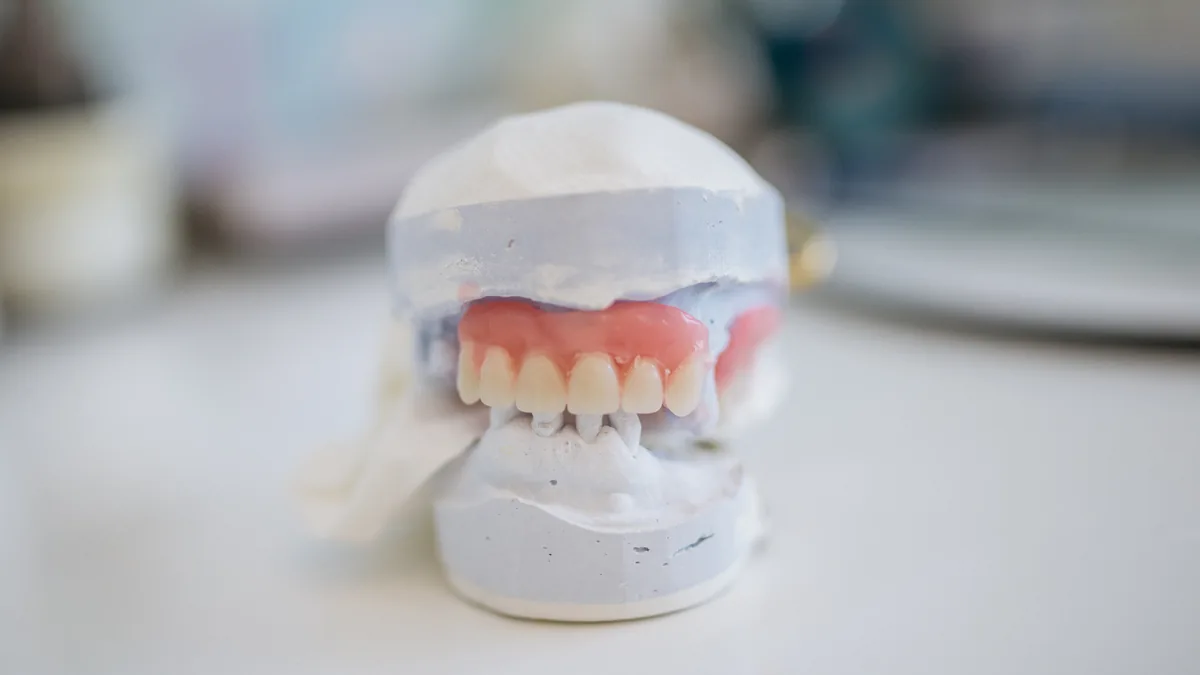
Clear aligners are thin plastic trays that move teeth a little at a time. They are sold two ways. In the traditional model, a dentist or orthodontist examines you in person, takes records, plans treatment and sees you during it. In the at-home or direct-to-consumer model, you take impressions or have a scan, send photos, and receive aligners by post, with a remote clinician reviewing your case. This guide sets out the difference, what regulators and professional bodies in the US and UK say, and the questions to ask before you pay for either.
What aligners can and cannot do
Aligners are an established treatment, not a gimmick. A systematic review in BMC Oral Health that compared aligners with fixed braces concluded that both were effective in treating malocclusion. It found aligners had an advantage in some movements and in treatment duration in the studies included, but were not as effective as braces at producing good contact between the upper and lower teeth, controlling the angle of tooth roots (torque) and retention. The evidence base is still developing: the review included eight studies, only two of them randomised trials.
The practical point is that aligners suit some bites better than others. Mild crowding or spacing is generally simpler than a deep bite, a large overjet, or problems with how the jaws meet. Deciding which category you fall into is a clinical judgement, and that is where the two models differ most.
What the FDA says
In the US, aligners are prescription medical devices. The Food and Drug Administration's consumer page on clear aligners states that it "has not authorized clear aligners that are sold directly to consumers without a prescription and supervision by a dentist or orthodontist," and that using them without proper professional supervision "may increase the risk of complications." The FDA lists problems it has received reports about, including new or worsening dental pain, jaw pain, bite problems, worsening misalignment and new gaps between teeth.
The FDA recommends an in-person evaluation by a licensed dentist or orthodontist before treatment and periodic in-person visits during it. It does not dismiss remote care: it calls virtual visits a useful part of dental care. It also suggests checking that an aligner is cleared by searching its 510(k) database under product code NXC, rather than relying on a company being "FDA registered", which refers to a facility listing, not product review.
What the American Association of Orthodontists says
The AAO, which represents orthodontic specialists in the US, has campaigned for years for in-person examination before orthodontic treatment. Its consumer alert argues that orthodontic treatment moves living tissue and that mistakes can lead to "potentially irreversible and expensive damage such as tooth and gum loss, changed bites, and other issues." It suggests asking any provider:
- Are comprehensive records such as X-rays taken before treatment, and are they included in the fee?
- Does the fee include a clinical examination of your bite and jaws?
- Do you get in-person visits during treatment, how many, and who supervises them?
- Do you know the name, credentials and licensing state of the dentist or orthodontist responsible for you?
- Is only one type of treatment offered, and if so, how do you know it is right for you rather than, say, braces?
- Who is responsible for spotting problems during treatment?
Bear in mind that the AAO is a professional association whose members provide in-office treatment. Its questions are useful whichever route you choose, and its position is consistent with the FDA's.
What UK regulators and the British Orthodontic Society say
In the UK, the General Dental Council (GDC) regulates dentists. Its statement on direct-to-consumer orthodontics says such treatment is dentistry and may only be provided by GDC-registered professionals. It says clinical judgements about suitability must be based on a full assessment of the patient's oral health, that there is no effective substitute for a physical examination as the foundation of that assessment, and that direct interaction between patient and practitioner, in person or remotely, is essential for valid consent. Patients must know the full name of the dental professional responsible for their treatment and be able to contact them.
The GDC's patient page on aligners sent to your home suggests asking the dentist to explain why an in-person check-up is not needed in your case, notes that taking an impression is a dental skill that needs training, and recommends checking the dentist's registration on the public GDC register. The British Orthodontic Society welcomed the GDC's statement and advises that anyone seeking orthodontic treatment should speak to a dentist or orthodontist first.
At-home versus in-office: the real differences
Assessment
In-office treatment normally starts with an examination, X-rays and a scan. At-home models vary: some arrange a scan at a partner location, others rely on impressions you take yourself and photographs. Ask exactly what records will be taken and whether a clinician will examine you in person at any point. Gum disease, decay or loose fillings can make tooth movement risky, and some of these are hard to judge from photos.
Supervision during treatment
In-office patients usually have regular check-ups where the clinician can add attachments, adjust the plan or switch approach. At-home patients usually check in remotely. Ask how often a clinician reviews your progress, how you contact them, and what happens if teeth are not tracking.
Scope
Because the clinician is not routinely examining you, at-home services tend to focus on mild to moderate cosmetic cases. If you are told you are suitable, ask what features of your bite make you suitable, and what would make you unsuitable.
Cost and what is included
At-home treatment is usually marketed as cheaper. Compare like with like: check whether retainers, refinement aligners, scans and any in-person visits are included, and what happens if the result is not what you expected. The AAO points out that if records are not part of the package, getting them elsewhere is an extra cost.
Accountability
Both the GDC and the AAO stress knowing who is responsible for your care. In the UK, the dentist who prescribes your aligners is responsible for your treatment; in the US, ask which state the dentist is licensed in. If you cannot find out who your clinician is, treat that as a warning sign.
Red flags, whichever route you choose
Pulling together the FDA, GDC and AAO guidance, these are signs to stop and ask more questions before you pay:
- You cannot find out the full name and registration or licence of the clinician responsible for your treatment.
- There is no way to contact that clinician directly if something goes wrong.
- No one has asked about your dental history, recent check-ups, gum health or existing crowns and fillings.
- You are told you are suitable before anyone has seen a scan, impression or X-ray.
- The provider describes itself as "FDA registered" but cannot point to a cleared device.
- The plan has no clear answer on what happens if your teeth stop tracking or you are unhappy with the result.
When a simpler or cheaper route makes sense
For a small cosmetic change in an otherwise healthy mouth, and if you have had a recent dental check-up that found no problems, some people find a supervised remote programme acceptable, especially if it includes a scan, a named dentist you can contact, and a clear refund or refinement policy. For anything beyond that, or if you have gum problems, crowns, bridges, jaw pain or a bite that feels wrong, an in-person orthodontic assessment is the safer starting point. Your regular dentist can tell you whether a referral to an orthodontist makes sense.
Whatever you choose, keep wearing aligners as prescribed, keep retainers afterwards, and report unexpected pain or bite changes to your clinician. In the US, serious problems can be reported to the FDA through MedWatch; in the UK, concerns about a dental professional can be raised with the GDC.
This guide summarises what regulators, professional bodies and published research say. It is not dental advice. Only a qualified dentist or orthodontist who has examined you can say whether aligners suit your teeth.