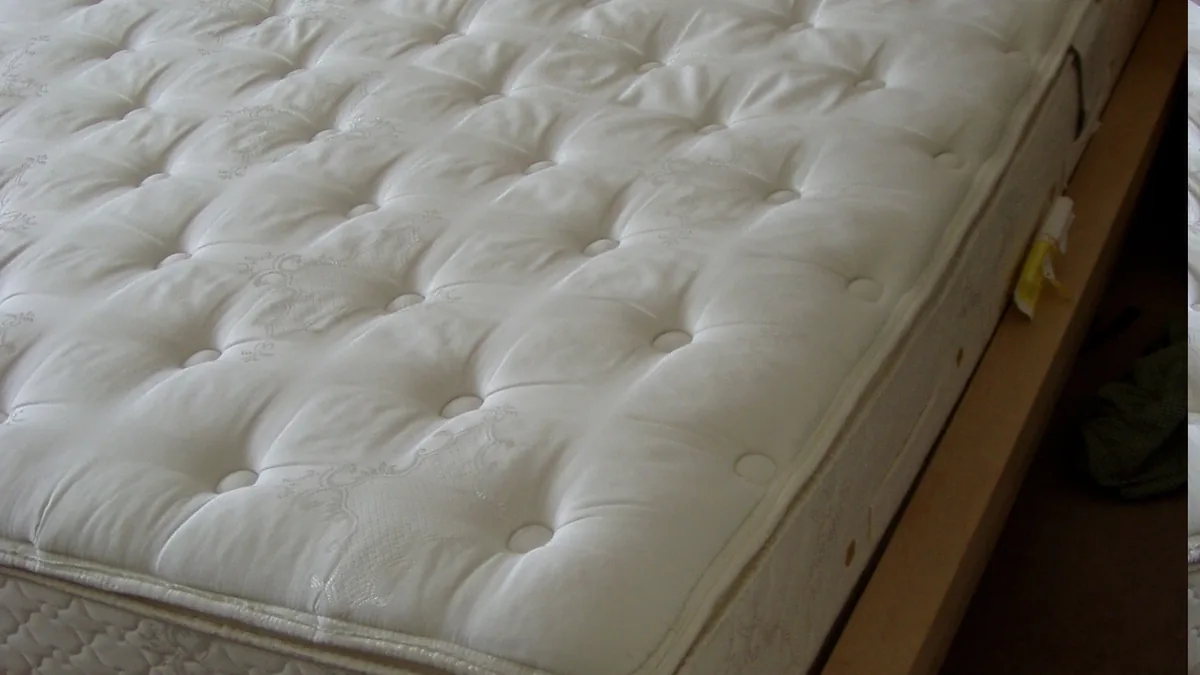
The U.S. Consumer Product Safety Commission (CPSC) announced on September 24 the recall of three mattress brands sold on Amazon, about 49,460 mattresses in total, because they violate the mandatory federal flammability standard for mattresses. The agency says each one poses "a risk of serious injury or death from fire". No fires or injuries have been reported, but the larger of the three recalls covers mattresses sold over roughly a year and a half, so many may still be in use.
What happened
The three recalls were posted together on the CPSC website. Each notice uses the same hazard wording: the recalled mattresses "violate the mandatory flammability standard for mattresses, posing a risk of serious injury or death from fire." None of the notices says which part of the standard the mattresses failed or how the failure was found.
Kesyup (recall number 26-788)
- Units: about 48,405.
- Description: 12 inch mattresses with a white top and blue sides and trim, in twin, full, queen and king sizes, sold compressed in a box. The sewn-in white label reads "Prototype ID: <PU-US>".
- Sold: on Amazon.com from December 2024 through April 2026, for about $100 to $200.
- Firm: S-Q Business (HK) Limited, doing business as ZCK01. Made in China.
- Remedy: a full refund. Owners should stop using the mattress, write "Recalled", their name and the date on it in permanent marker, email a photo to the firm, and then dispose of the mattress according to local and state procedures.
WinxMatrs (recall number 26-793)
- Units: about 792.
- Description: black, 10 inch, twin size mattresses sold compressed in a box, with the brand and size on a sewn-in label.
- Sold: on Amazon.com from August through November 2025, for about $120.
- Firm: Huizhou Xiqijun Trading Co., Ltd, doing business as Xinan Home, of China.
- Remedy: a full refund. Owners should write "RECALLED" in permanent marker on the top surface and on the label, photograph both, and email the photos to the firm.
Emerspring (recall number 26-796)
- Units: about 263.
- Description: queen size, 12 inch mattresses with a white top and sides and green trim, sold compressed in a box. The sewn-in white label on the side shows "Prototype ID: <EMERS-12>" and a manufacture date of 6/2025.
- Sold: on Amazon.com from January through May 2026, for about $226.
- Firm: Style Homeware, Inc., of Monrovia, California. Made in Indonesia.
- Remedy: not a refund. Owners should stop using the mattress and contact Style Homeware for a free fitted cover that brings it into compliance with the standard.
All three firms list an email address as their only consumer contact. The addresses are on each CPSC notice, and owners should take them from there rather than from a search result or a message that claims to be about the recall.
The background
Every mattress sold in the U.S. has to meet two federal rules issued under the Flammable Fabrics Act. According to the CPSC's business guidance, 16 CFR Part 1632 covers smoldering ignition, such as a lit cigarette: after testing, the mattress must not show a char length of more than 2 inches in any direction from the cigarette. 16 CFR Part 1633 covers open flame. In a 30 minute test, the mattress set must not exceed a peak heat release rate of 200 kilowatts at any point, and its total heat release must not exceed 15 megajoules in the first 10 minutes.
The open flame rule is the newer of the two. The Commission published it in the Federal Register on March 15, 2006, and it applies to mattress sets manufactured, imported or renovated on or after July 1, 2007. The final rule explains why: mattresses that comply "will generate a smaller size fire with a slower growth rate, thus reducing the possibility of flashover occurring." At the time, the Commission estimated the standard could eliminate 240 to 270 deaths and 1,150 to 1,330 injuries a year.
In a CPSC staff video series for manufacturers, the agency's fire protection engineer describes what that means in a real room. Before the rule, she said, people "did not have time to react before the room reached flashover", the point at which everything burns at once. The same material puts mattress fires at an annual average of 330 deaths in the U.S. and calls them one of the leading contributors to home fire deaths.
The rule does not dictate how a mattress passes. Most manufacturers use a fire-blocking barrier in or under the cover fabric, but CPSC staff warn that barriers "are not foolproof" and that some combinations of materials defeat them. That is why the standard is built around prototypes: each design must be tested, and manufacturers and importers must keep test records, specifications and photographs for as long as the design is produced plus three years. The permanent label must show the maker's name and address, the month and year of manufacture, the model and the prototype ID, and certify compliance. The "Prototype ID" text in two of these notices is that label field.
This is not the first such recall this year. In August the CPSC announced a recall of about 251 Koorlian mattresses sold on Amazon, with a free cover as the remedy, and in July 2025 Amazon itself recalled about 2,700 Amazon Basics mattresses for violating the same standard.
Why it matters
The scale is uneven. Two of the recalls are small, but the Kesyup recall is about 48,405 units sold over 17 months, far more than the other recent mattress flammability recalls mentioned above. Mattresses are kept for years, and these were cheap, compressed beds in a box, the kind often bought for a guest room, a child's room or a first apartment.
The recalls also show where the compliance burden falls. The standard places the testing and record keeping duty on manufacturers and importers. Two of the three firms are based outside the U.S., and every unit was sold through a single online marketplace. The CPSC notices name Amazon.com only as the place of sale and do not describe any role it played in the recalls.
Finally, the remedies differ in a way that matters to owners. A refund requires destroying the mattress's resale value with a marker and a photograph, which is meant to keep recalled units off the second hand market. The Emerspring remedy instead relies on owners fitting a cover; the CPSC says the cover brings the mattress into compliance, and owners are told to stop using the mattress until they have it.
What we do not know yet
- How the mattresses failed. The notices do not say whether they failed the open flame test, the cigarette test or a labeling or record keeping requirement, or by how much.
- How the problem was found. The notices do not say whether the violations came from CPSC sampling, a complaint or the firms' own testing.
- Whether other models are affected. Each notice covers one brand and specific identifiers. Whether the same factories supplied other brands is not stated.
- How many units remain in homes. The figures are units sold. The CPSC has not published how many owners have responded.
- How the free cover works. The Emerspring notice does not describe the cover or how long it takes to arrive.
What it means for you
- Check the label. Find the sewn-in label, usually on the side of the mattress, and compare the brand, size, color and "Prototype ID" text with the details above.
- If it matches, stop sleeping on it. All three notices tell owners to stop using the mattress immediately.
- Follow the remedy for your brand. Kesyup and WinxMatrs offer refunds after you mark and photograph the mattress; Emerspring offers a free fitted cover. Use the email address printed on the CPSC notice.
- Dispose of it properly. The Kesyup notice asks owners to follow local and state disposal rules. Do not sell, donate or give away a recalled mattress.
- Look at any mattress you own. The federal rules require a permanent label naming the manufacturer, the date of manufacture and the prototype ID and certifying compliance. A mattress without one is worth asking the seller about.
- Report problems. The CPSC asks consumers to report unsafe products at SaferProducts.gov or on its hotline, 800-638-2772.