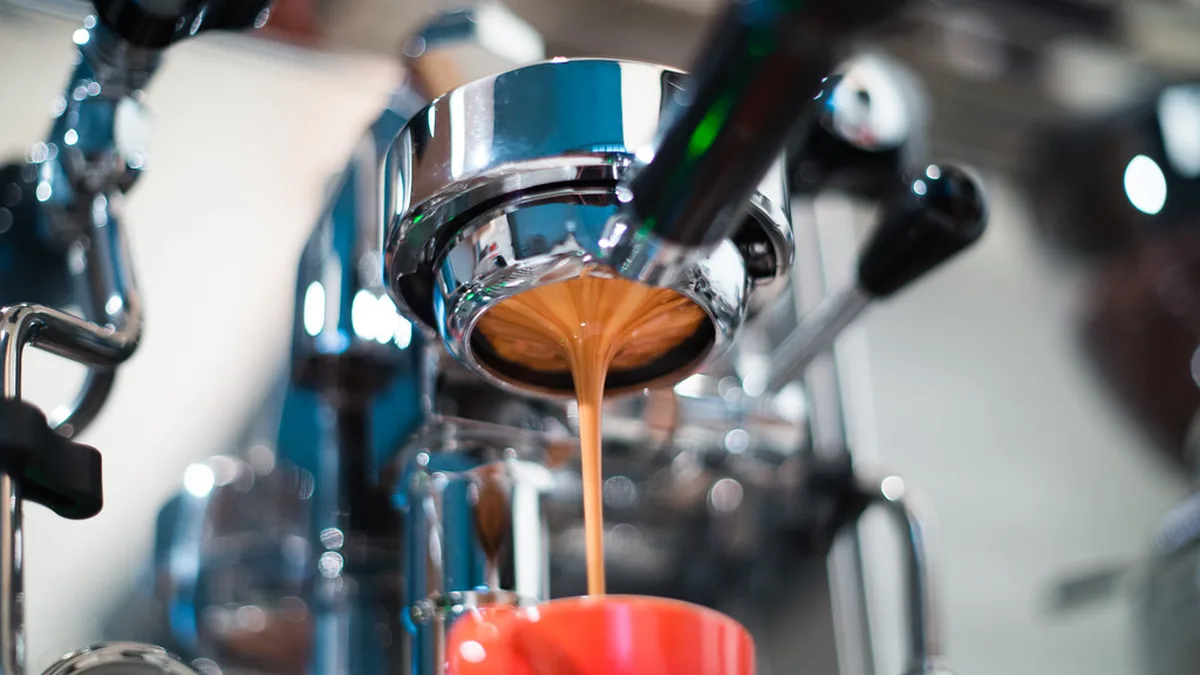
OutIn has launched the Nano 2, a battery-powered portable espresso machine, and the company is selling it on one headline promise: less worrying about the charge. According to the company's press release dated 9 October, the machine went on sale exclusively at outin.com on 18 September and reached Amazon on 8 October, with initial availability focused on North America and Europe. For anyone shopping the espresso machine category, it is a useful reminder of how to read battery claims on a gadget that heats its own water.
What OutIn says has changed
The Nano 2 is the follow-up to the original Nano. The numbers below come from OutIn's own product page and its Nano 2 FAQ, so they are the maker's claims, not independent measurements.
- Battery: a 5,000 mAh (3S), 54 Wh pack that OutIn says gives twice the endurance of the first Nano.
- Brews per charge: up to nine cups when heating 50 ml of water from 25°C to 93°C per brew. The page says results are based on internal OutIn lab testing and that individual performance may vary.
- Charging: 45W USB-C PD fast charging, a full charge in about 100 minutes against 180 minutes for the first Nano. The page says a five-minute charge is enough for up to 30 extractions, but only with preheated water at 93°C.
- Heating and pump: a 120W heating system that can heat room-temperature water in as little as 159 seconds, and a pump OutIn describes as "up to 21 bar".
- Coffee: an 85 ml water tank and an 8 g basket for ground coffee, plus support for Nespresso Original Line capsules.
The press release gives the weight as roughly 740 g and says the machine works with ground coffee or capsules at the press of one button.
Price and where it sells
At the time of writing, OutIn's product page lists the Nano 2 at $179.99 USD in all four colours: Canyon Green, Space Grey, Forest Green and Pearl White. The press release itself does not state a price. The same page also pushes an accessory bundle, which includes items such as a separate grinder and a protective case, so the machine alone and the bundle are two different spends. Prices on other retailers, including Amazon, may differ, and we have not verified them.
The fine print that matters more than the headline
The nine-cup figure is a best case. It applies to heating cold water, and the number of brews depends on how much water you use and the conditions. The FAQ makes a second claim: over 600 extractions per charge when using preheated water. That is a very different use, because far less heating is needed, so the two numbers should not be compared with each other or with another brand's figures unless the test method is the same.
Charging has conditions too. The FAQ says the full 45W rate needs a USB-C PD adapter delivering 20 V / 2.25 A and a USB-C to USB-C cable. It warns that older 5 W phone chargers may charge the Nano 2 extremely slowly or not give enough power, and that a USB-A to USB-C connection generally will not support the full rate. It also tells owners not to operate the machine while it is charging, because that may trigger the over-temperature protection.
Other limits from the same pages:
- It heats water only. OutIn says not to put milk or other liquids in the tank.
- It does not fit Dolce Gusto capsules, only the Original Line.
- The first Nano's Basket Plus accessory is not compatible with the Nano 2. OutIn says a Nano 2 version is coming "soon", so owners of the older accessory cannot carry it over for now.
- For air travel, the product page says to carry it in hand luggage only and not use it in flight, and to follow airline rules.
Why this matters to espresso buyers
Many espresso shoppers are comparing countertop machines from brands such as Breville, De'Longhi, Jura, Gaggia or Ninja. A portable machine is a different product with a different job: coffee away from a kitchen. The Nano 2 does not replace a home machine, and OutIn does not claim it does. It describes the machine as suited to camping, travel and commuting. Where it overlaps with home buying is the marketing language: pressure ratings, "barista-level" wording and endurance figures all appear across the category, and they are easiest to compare when the test conditions are printed beside them.
It is also worth separating independent opinion from promotion. The press release includes praise from a champion barista who is described as an OutIn brand ambassador. That is a company-chosen endorsement, not an independent review, and we have not seen a full independent test of the Nano 2.
What to do
- Decide the job first. If you mostly make coffee at home, a kettle plus a manual or capsule setup, or a standard home machine, may be enough. A battery machine only makes sense if you really brew away from a power point.
- Read the test conditions. Check the water volume and starting temperature behind any "cups per charge" claim.
- Budget for the charger. Check that you own a USB-C PD adapter and cable that match the stated rating.
- Check the accessories. If you own first-generation parts, confirm they fit before buying.
- Wait for independent testing and check the seller's return and warranty terms on the page you buy from. We did not verify those terms.