
LifeLock review: our verdict
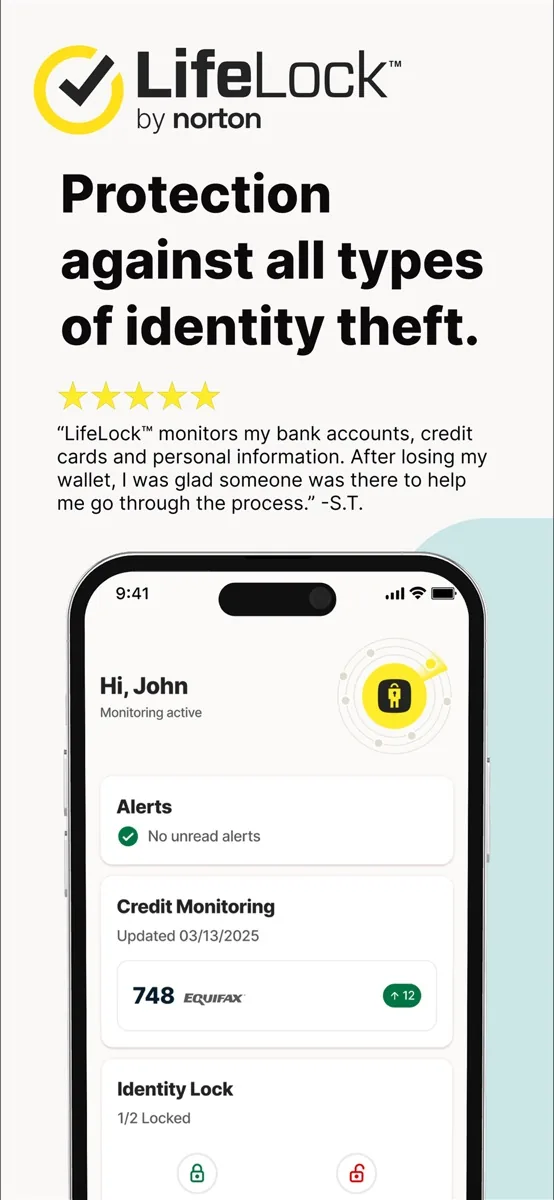
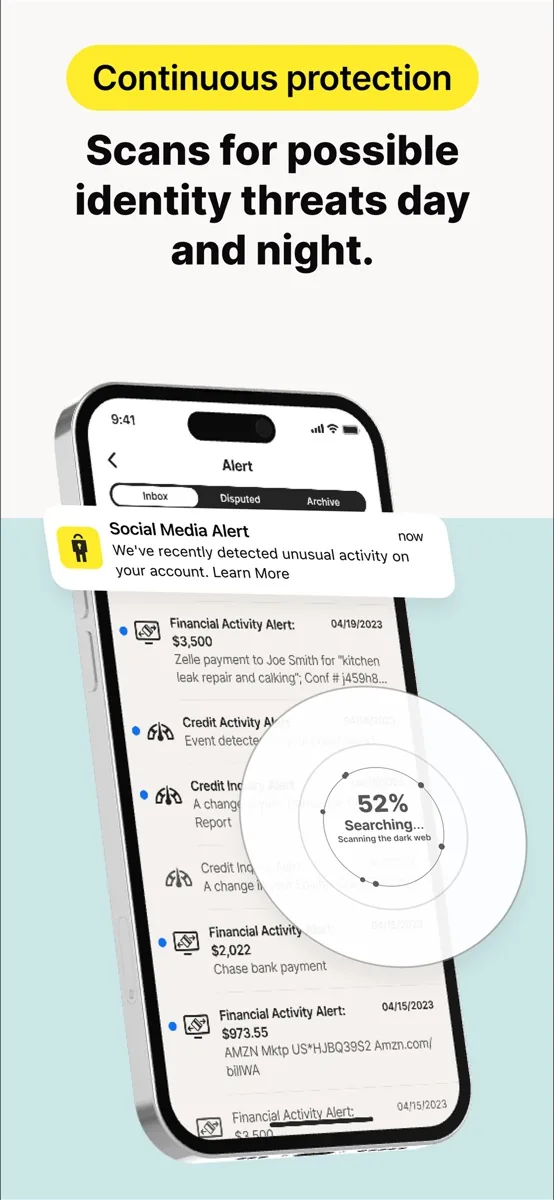
This LifeLock review covers one of the best-known names in identity theft protection, now owned by Gen Digital, the company behind Norton. LifeLock watches for signs that someone is using your personal information: new credit applications, changes to your credit file, your details turning up on the dark web, unusual activity on linked bank and investment accounts, and changes to the title of your home. When something looks wrong, it alerts you, and if your identity is stolen, US-based restoration specialists help you put things right, backed by reimbursement for covered losses and expenses.
Its strength is depth. The higher plans combine three-bureau credit monitoring, account alerts across unlimited accounts, home title and investment monitoring, and some of the largest reimbursement limits in the category, and the Norton 360 bundles add full device security on top. Its weaknesses are cost and complexity: the line-up of plans is confusing, the cheapest tier is noticeably thinner, and renewal prices rise after the first year. Some of what LifeLock offers, such as freezing your credit, you can also do yourself for free.
NerdBible did not run its own hands-on trial for this review. It is an editorial assessment built from LifeLock's own plan and coverage pages, Federal Trade Commission material and the published findings of independent outlets, credited and linked below.
What is LifeLock and who is it for?
LifeLock is a US identity protection service. The LifeLock homepage describes it as monitoring for identity threats, alerting you, and helping you recover if your identity is stolen. It is sold on its own and as part of Norton 360 with LifeLock, which adds antivirus, a VPN and other device protection.
It suits:
- People who would rather not watch their own credit and accounts. NerdWallet frames this as the main reason to pay: the service does the checking for you.
- Households with several adults and children. Family plans cover two adults and up to ten children.
- Homeowners and people with investment or retirement accounts, on the top tier, where home title monitoring and investment activity alerts are included.
- Anyone who also needs device security and prefers one bill for both.
Coverage details such as scam reimbursement apply to US residents, so the service is aimed squarely at the US market.
Key features
Credit monitoring and locks
According to the LifeLock plans page, credit monitoring ranges from fewer bureaus on the entry plan to all three on the higher plans, with credit reports and scores refreshed on different schedules by tier. Security.org explains that the entry Core plan monitors two bureaus while Advanced and Total monitor all three. Plans also include a Credit and Payday Loan Lock; Security.org notes that the lock covers TransUnion only, so you would still freeze or lock Experian and Equifax separately. The plans page itself cautions that a lock cannot prevent every account takeover or credit inquiry.
Dark web, account and home title alerts
All LifeLock plans include breach alerts and dark web monitoring, according to the plans page. Account activity alerts for credit, checking and savings accounts scale by tier: Security.org reports up to two accounts on Core, five on Advanced and unlimited on Total, with 401(k) and investment activity alerts reserved for Total. Home title monitoring also appears on the plans page.
Identity restoration and reimbursement
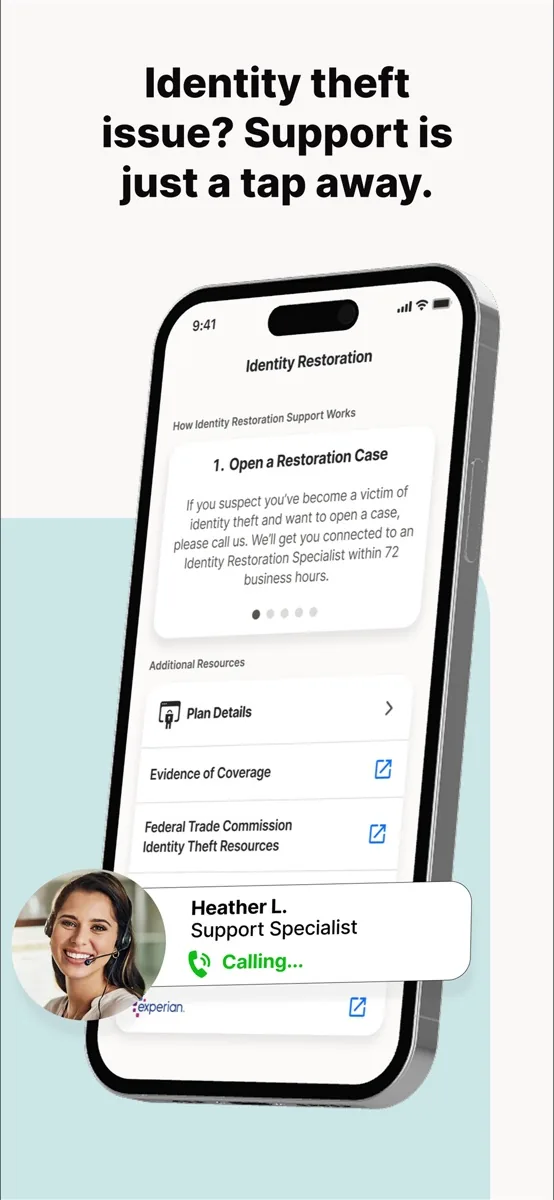
Every plan includes identity restoration specialists. The plans page lists reimbursement for identity theft of up to about one million dollars on Core, rising on Advanced, and up to three million dollars on Total, with separate and smaller limits for stolen funds on the lower tiers. The benefits are provided under an insurance master policy, and the plans page directs readers to the Summary of Benefits for exclusions, which is worth reading before you rely on any figure.
Scam protection
Newer plans add scam support and a scam reimbursement benefit. The plans page states that this coverage is issued by HSB Specialty Insurance Company, is available to US residents including territories and Washington DC, and excludes residents of New York.
Norton 360 bundles
Norton 360 with LifeLock plans pair identity protection with Norton's security suite for a set number of PCs, Macs, phones and tablets, or unlimited devices on the top tier. The standalone LifeLock Core, Advanced and Total plans do not include device security.
How much does LifeLock cost? Plans and pricing structure
Current prices appear in our comparison above. The structure, from the plans page, is:
- Three LifeLock tiers: Core, Advanced and Total, each available for one adult, two adults, or a family of two adults and children.
- Norton 360 with LifeLock: bundles that add device security, including Select and Ultimate Plus.
- Billing: monthly or annual. Annual plans carry a 60-day money-back guarantee and are billed up to 35 days before they expire.
- Introductory pricing: discounts apply to the first term only, then the standard price applies, a point Security.org and Tom's Guide both raise.
Optional extras, such as a paid assistant that requests removal of your details from data broker sites, add to the total, according to Tom's Guide.
Is LifeLock safe and trustworthy?
LifeLock today is part of a large, established security company, and the independent outlets we cite treat its monitoring and restoration service as credible. It is still fair to know its history. The Federal Trade Commission and 35 states settled charges with LifeLock over claims about its identity theft prevention and data security, and the FTC later secured a further settlement of $100 million over alleged violations of that order. Neither action is recent, and both concerned LifeLock's earlier marketing and data security practices.
Two practical safety notes. First, Tom's Guide reports that criminals impersonate Norton and LifeLock in phishing emails with fake invoices, so check any billing email inside your account rather than clicking its links. Second, no service can stop identity theft outright; LifeLock's own fine print says its locks cannot prevent every account takeover. What it offers is faster detection and help with recovery.
What could be better
- Complex line-up. Three LifeLock tiers, several Norton bundles and paid add-ons make comparison harder than it should be. Tom's Guide calls the line-up complicated.
- Cost over time. Every outlet notes that LifeLock is among the pricier services and that renewal prices rise.
- Entry plan is thin. Core has fewer bureaus, fewer monitored accounts and lower stolen-funds limits.
- Single-bureau lock. The included lock covers TransUnion only.
- Busy software. Tom's Guide found the app can feel overwhelming because it covers so much.
Who should choose something else?
If you mainly want to stop new credit being opened in your name, the FTC's guidance on credit freezes and fraud alerts explains that you can freeze your credit at each bureau at no cost, and that a freeze does not affect your credit score. People who are comfortable checking their own reports and accounts may find that plus their bank's alerts enough. Those who want a cheaper identity service with fewer extras should compare lower-cost rivals. LifeLock makes most sense for people who want broad monitoring, hands-on restoration help and high reimbursement limits in one place. For questions about your own credit or legal position after identity theft, speak to a qualified adviser.
Is LifeLock worth it? Bottom line
LifeLock remains one of the most complete identity theft protection services available, with deep monitoring on its higher tiers, US-based restoration specialists and large reimbursement limits. It is not cheap, its plans take some decoding, and some of its protections can be replicated for free by a determined user. If you want comprehensive coverage and someone in your corner when something goes wrong, the Advanced or Total tier, or a Norton 360 bundle if you also need device security, is a strong choice. Read the Summary of Benefits and note the renewal price before you buy.
What other reviewers found
- Tom's Guide described LifeLock as one of the most comprehensive services available, praising its three-bureau monitoring and scam protection while calling it expensive and its software potentially overwhelming.
- NerdWallet saw wide-ranging monitoring and the antivirus bundle as the main reasons to buy, and higher cost than competing services as the main reason not to.
- Security.org liked its monitoring across all three bureaus and investment accounts, and warned that most plans renew higher and that only the expensive plans carry the largest reimbursement limits.
- PCMag, reviewing Norton 360 with LifeLock, rated its identity theft remediation as powerful and its device security as excellent, noting that security features are more limited on iOS.
Where the outlets agree and disagree
The reviewers agree on the essentials: LifeLock's coverage is among the broadest available, its restoration support is a real strength, and it costs more than most rivals, especially after the first year. Where they differ is on whether the extras are worth paying for. PCMag argues that the Norton 360 bundles are the better buy because device security adds relatively little to the cost, while NerdWallet and Security.org focus on whether you need paid monitoring at all, given free tools like credit freezes and free credit reports. For a buyer, the sensible approach is to decide first whether you want a managed service rather than doing it yourself, then pick the tier whose monitoring matches what you actually own: bank accounts, investments, a home, children.
Frequently asked questions
What does LifeLock actually do?
LifeLock monitors for signs that your personal information is being misused, including credit file changes, dark web exposure, unusual activity on linked accounts and, on higher tiers, home title and investment account changes. It alerts you when it finds something, and if your identity is stolen, restoration specialists help you recover, with reimbursement for covered losses under its insurance-backed benefits.
Can LifeLock prevent identity theft?
No service can prevent identity theft completely, and LifeLock's own plan page says its locks cannot stop every account takeover or credit inquiry. What it does is shorten the time between misuse and discovery, and help with recovery. Combining it with good habits, such as unique passwords and a credit freeze at each bureau, gives the best overall protection.
Does LifeLock include antivirus?
Only in the Norton 360 with LifeLock bundles. The standalone LifeLock Core, Advanced and Total plans focus on identity monitoring and restoration. The Norton 360 with LifeLock plans add Norton's security suite and VPN for a set number of devices, or unlimited devices on the top Ultimate Plus tier, according to LifeLock's plans page.
Is there a LifeLock money-back guarantee?
Yes. LifeLock's plans page states that annual plans come with a 60-day money-back guarantee. Annual subscriptions are billed up to 35 days before they expire, and introductory discounts apply only to the first term, after which the standard price applies. Check your renewal date in your account if you want to change plans before you are charged again.
Can I protect my identity for free instead?
Partly. The FTC explains that you can freeze your credit at each of the three bureaus at no cost, which stops new credit being opened in your name, and Security.org points out that you can pull your own credit reports for free through the official annual credit report service. What paid services add is automatic monitoring across many sources, alerts, and professional help and reimbursement if something goes wrong.
Sources
- Identity Theft Protection, LifeLock Official Site
- LifeLock Protection Plans, Cost and Subscription Details, LifeLock
- Credit Freezes and Fraud Alerts, FTC Consumer Advice
- LifeLock Will Pay $12 Million to Settle Charges by the FTC and 35 States, Federal Trade Commission
- LifeLock to Pay $100 Million to Consumers to Settle FTC Charges, Federal Trade Commission
- LifeLock identity theft protection review, Tom's Guide
- LifeLock Review, NerdWallet
- LifeLock Identity Theft Protection Review, Security.org
- Norton 360 With LifeLock Review, PCMag