teenage engineering explained: the OP-1, pocket operators and which device is for you
From pocket operators to the OP-XY: what each teenage engineering device does, the specifications the company lists, what reviewers criticise and which one fits your music making.
teenage engineering, which writes its name in lower case, makes some of the most recognisable music gear in the world: small, brightly finished instruments that look like design objects and cost anywhere from pocket money to the price of a good laptop. That range is confusing. A pocket operator and an OP-XY share a logo and a sense of humour, but almost nothing else. This guide explains who the company is, what each current device does according to the company's own product pages, and which one suits which kind of music making. NerdBible has not played these instruments: the specifications come from teenage.engineering, and the strengths and weaknesses come from published reviews, all linked below.
The quick answer
First device, small budget: a pocket operator, which the company describes as "affordable for everyone".
Sampling and beat making: the EP-133 K.O. II, a sampler and sequencer with 999 sample slots and 12 tracks per pattern.
Sequencing and live performance: the OP-XY, a 16-track sequencer with synths and samplers built in.
Recording ideas, tape style: the OP-1 field, a synthesizer, sampler and multitrack tape recorder in one aluminium body.
Field recording: the TP-7 recorder, optionally with the CM-15 microphone.
Listening, not making: the OB-4 radio and speaker.
Who teenage engineering is
The company was founded in Stockholm, Sweden, and its first product was the original OP-1 synthesizer, introduced at the NAMM show, according to the Wikipedia history of the company. The OP-1's portable, all-in-one approach became the template for most of what followed.
teenage engineering also designs for other brands, which is why its style turns up in places you might not expect. Wikipedia records the FREKVENS audio and lighting collection made with IKEA, the Playdate handheld game console for Panic (its crank is credited to teenage engineering), a design partnership with the electronics company Nothing, including audio work on its first earbuds, and the Rabbit r1 assistant device. The Verge reported that the r1's rounded body was designed in collaboration with teenage engineering.
The design philosophy shows in the products themselves: few controls, each doing several jobs, colour used to signal function, and graphics on screen that are playful rather than technical. That makes the devices quick to start with and, as reviewers often note, sometimes slower to master.
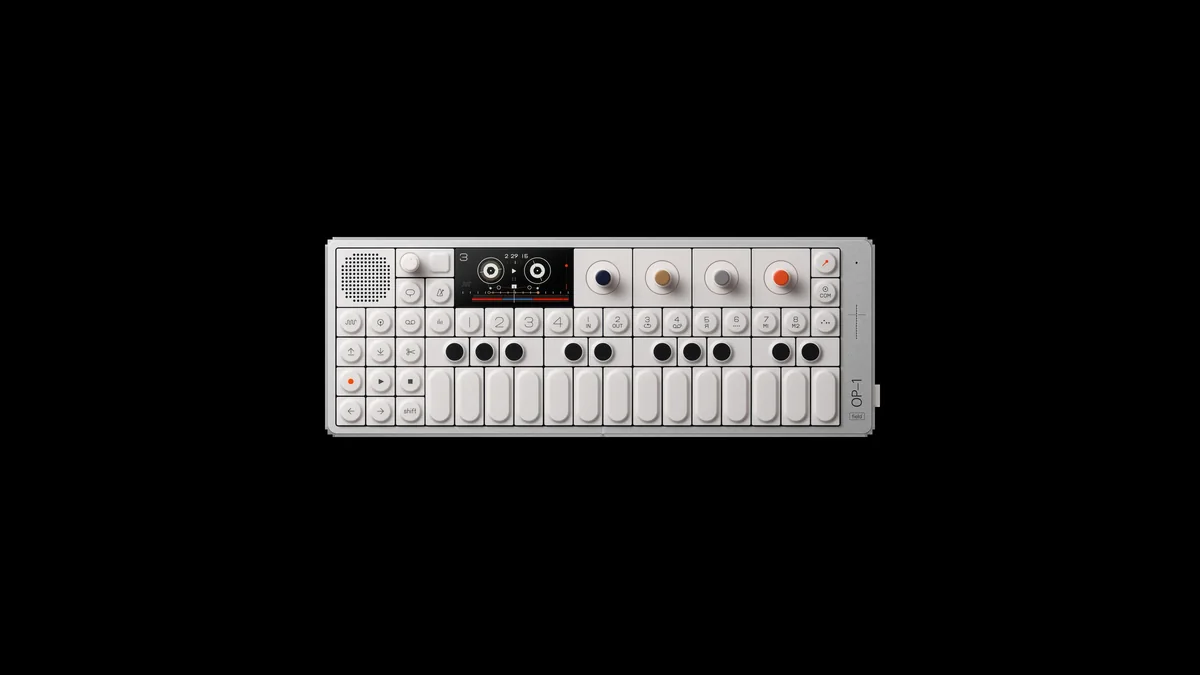
The OP-1 field is the updated version of the original OP-1: a portable synthesizer, sampler and recorder. teenage engineering lists stereo throughout the signal chain, 32-bit audio, Bluetooth Low Energy MIDI, USB-C (USB audio and MIDI, host and device), a built-in microphone, an FM radio that can receive and transmit, eight swappable tapes for recording with four tape styles, more than 160 minutes of sample storage and a 24-hour battery. It measures 300 x 120 x 20 mm and weighs 590 g. Its signature is the tape recorder: you build songs by recording synths and samples onto tape tracks rather than into a step sequencer.
MusicRadar called it "a stunning evolution of the original OP-1" and praised its sound and ease of learning, but said only the price held it back, and noted that tape edits have no undo.
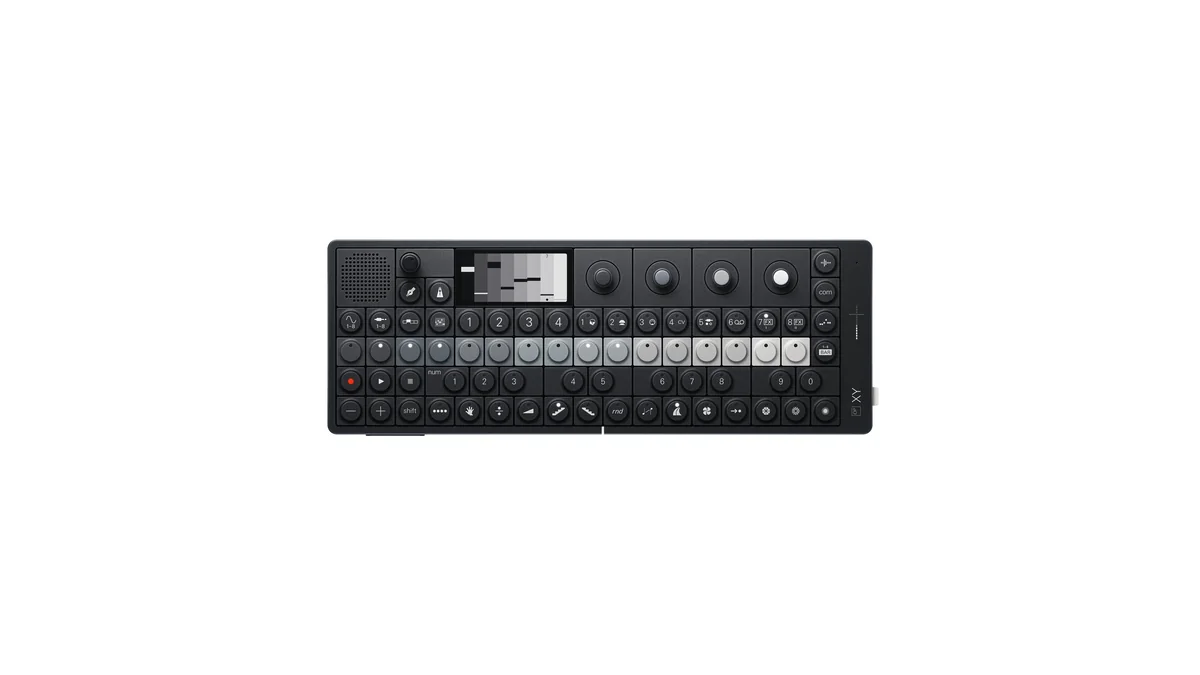
The OP-XY takes the sequencing ideas of the OP-Z and puts them in an OP-1 field style body with a screen. The company lists eight instrument tracks and eight auxiliary tracks (for effects, external synths, CV and more), eight synth engines, three samplers, 24-voice multitimbral synthesis, a 64-step sequencer with four pages per pattern, 14 step components that change how individual steps behave, a two-octave keyboard, a built-in microphone and speaker, Bluetooth LE MIDI, USB-C audio and MIDI, MIDI in, a multi-purpose output for CV, MIDI, sync or audio, and a 16-hour battery.
Sound On Sound called it "a genuinely useful and accessible portable workstation, marrying the OP-Z's sequencing with the OP-1's beauty", while listing no export or multi-channel output among its drawbacks. MusicRadar said it is "lovely, cool, does so much but costs too much".
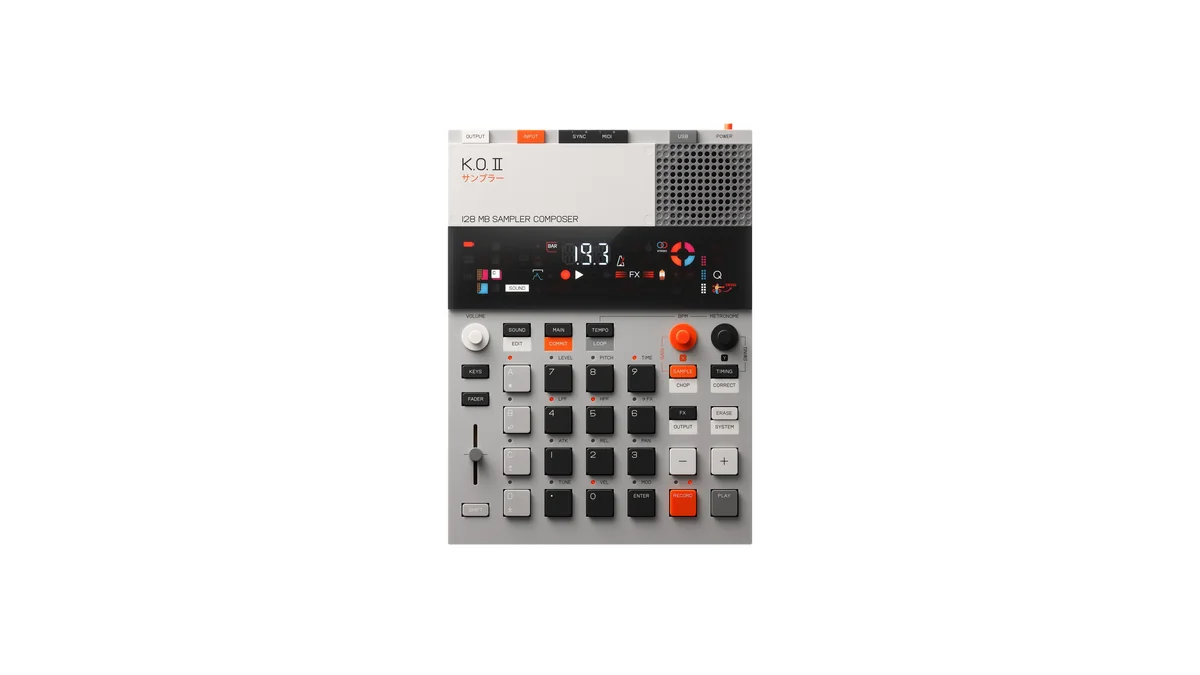
The EP series are flat, calculator-like grooveboxes. The EP-133 K.O. II is a sampler and sequencer based on the PO-33 K.O! pocket operator. teenage engineering lists 46 kHz, 16-bit sampling with a 32-bit internal signal chain, 999 sample slots, 128 MB of memory, nine projects with four groups of 99 patterns, 12 tracks per pattern, a song mode, fader and pressure-sensitive pads, a built-in microphone and speaker, MIDI and sync in and out, and power from four AAA batteries or USB-C. It measures 240 x 176 x 16 mm and weighs 620 g. Its product page currently advertises it at $329 in the US.
The same hardware appears in themed versions: the EP-1320 medieval, which the company calls the first medieval electronic instrument, with a library of medieval phrases, instruments and one-shot samples, and the EP-40 riddim, a rhythm and bass system with a live loop mode, a bass and lead synth, a reggae, dub and dancehall sound library and a dub siren. The EP-136 K.O. sidekick is a companion box: a two-channel mixer, effects unit and short looping sequencer that runs on two AAA batteries.
MusicRadar said the K.O. II "is far from the most powerful sampler on the market, but there's a lot of creative fun to be had within its limitations", called its price surprisingly reasonable for the brand, and found sound editing shallow in places. It also noted user reports online of units failing or parts breaking after short use, while saying its own review unit had no such problem. Some features it found missing at review, such as a proper song mode, are now listed on the product page.
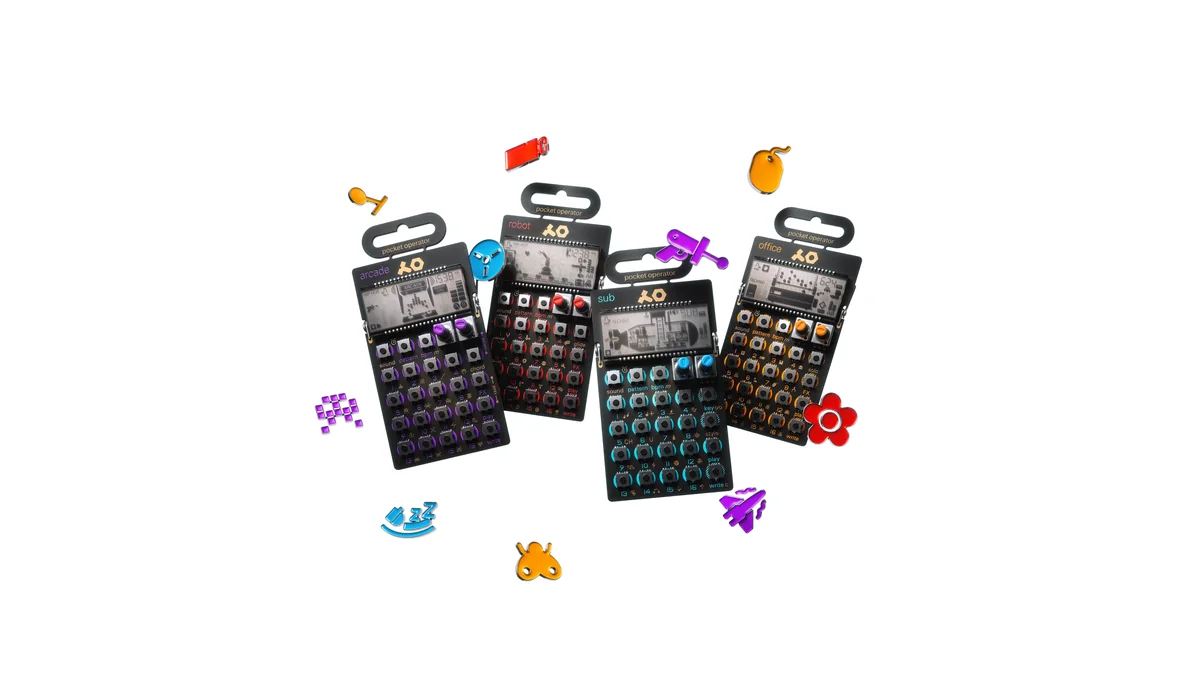
Pocket operators are bare circuit boards with a small LCD, built-in speaker, sync and audio jacks and, in the company's words, a one-month battery life. There is no outer case: teenage engineering says it put the sensitive components under the display to save that cost for better parts. The range includes drum machines (PO-12 rhythm, PO-24 office, PO-32 tonic), synths (PO-14 sub, PO-16 factory, PO-20 arcade, PO-28 robot), the PO-33 K.O! micro sampler with 40 seconds of sample memory and a microphone, and the PO-35 speak vocal synthesizer. Several can be synced together.
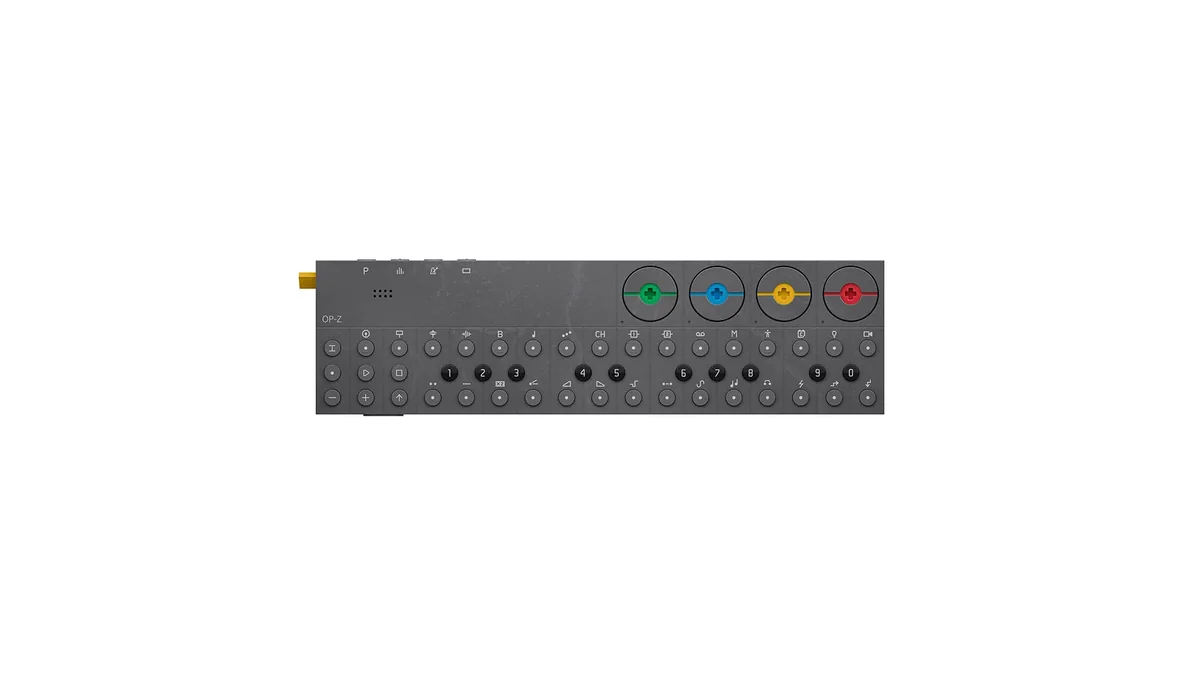
The OP-Z is a 16-track sequencer and synthesizer with sample-based and synthesis sounds. It has no screen of its own; the company suggests using your phone for visual feedback. It also sequences visuals and lights, which is unusual. The OP-XY is its more expensive, screen-equipped successor in spirit.
Field accessories: TX-6, TP-7 and CM-15
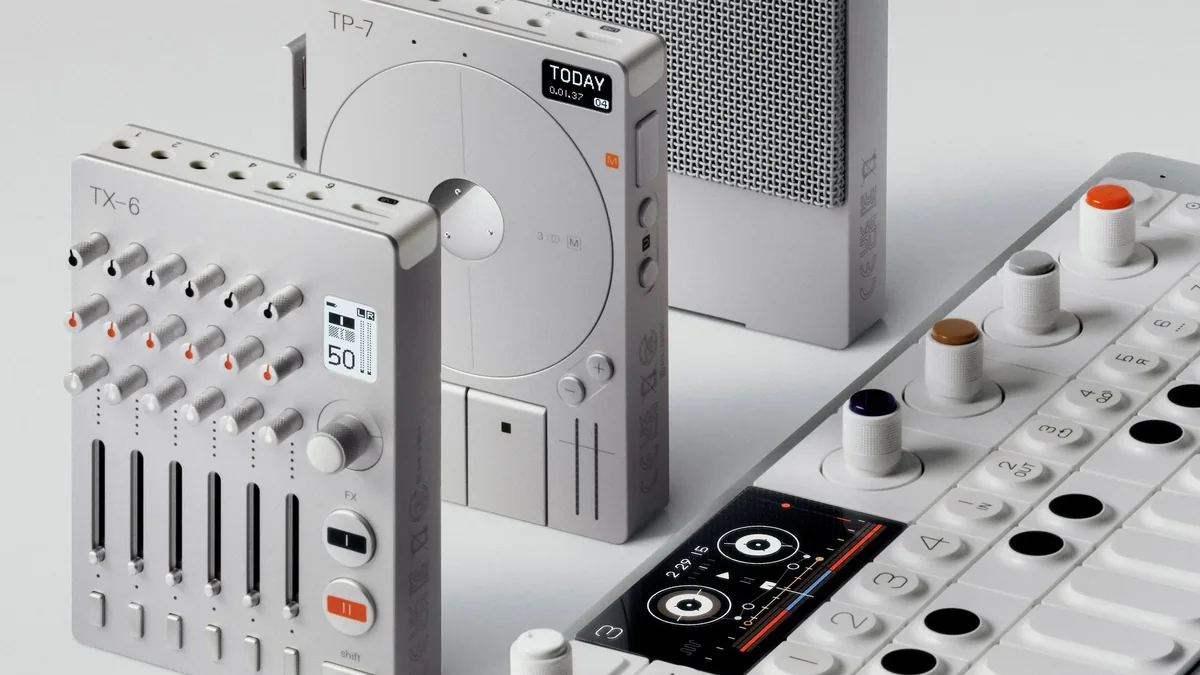
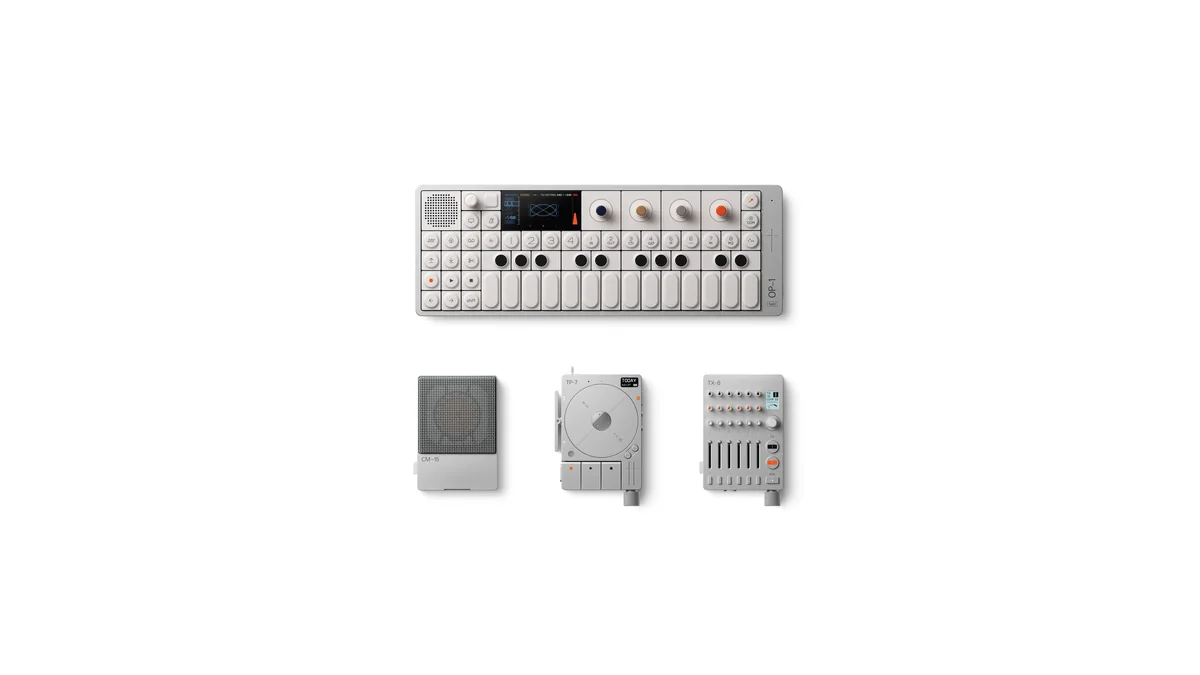
The field system: OP-1 field with the CM-15, TP-7 and TX-6. Image: teenage engineering
The TX-6 is a battery-powered six-channel stereo mixer and audio interface, 160 g, with an internal synth, sequencer, tuner and an 8-hour battery. The TP-7 is a field recorder with 128 GB of storage, an internal microphone and speaker, a 24-bit, 96 kHz USB audio interface and a 7-hour battery, weighing 170 g. The CM-15 is a pocketable large-diaphragm studio microphone with a one-inch capsule, built-in preamp and converter, USB-C, a 48 V phantom-powered mini XLR output, 3.5 mm line output and a 10-hour battery, at 132 g.
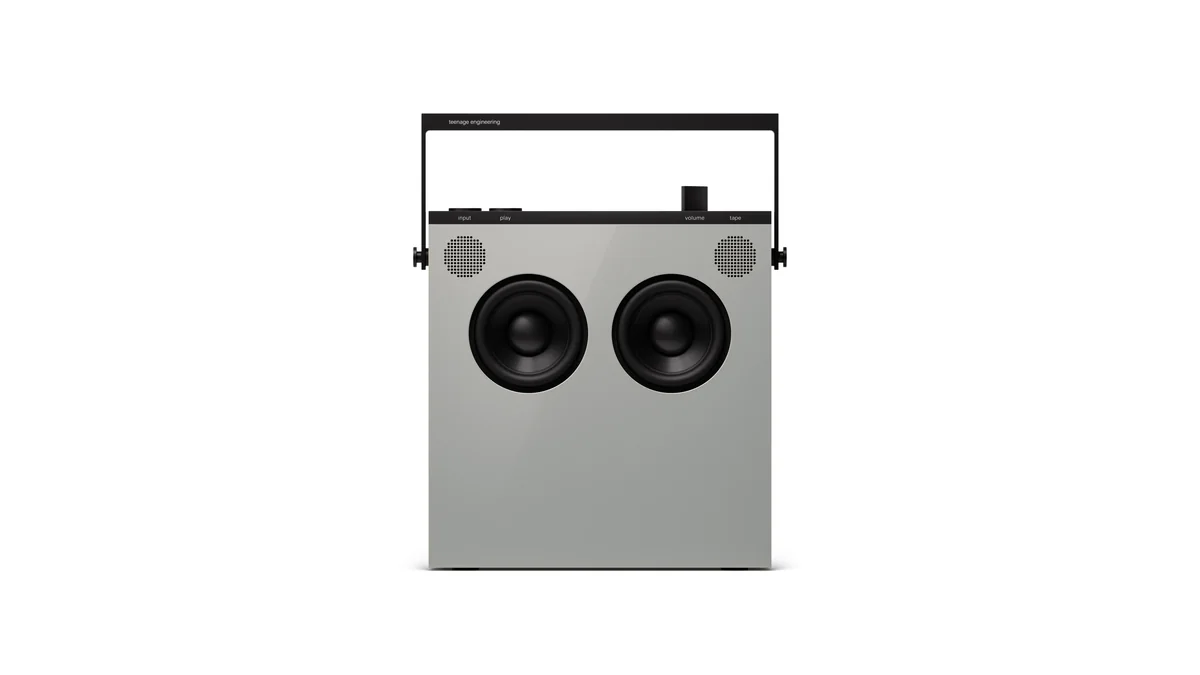
The OB-4 is a portable loudspeaker with Bluetooth, FM radio, line-in and a "disk mode" of generative and looping functions; the company quotes 40 hours of Bluetooth listening and a weight of 1.7 kg. choir is a set of eight wooden singing dolls that perform built-in choral pieces or your own compositions over MIDI via Bluetooth LE. computer-1 is a flat-pack mini-ITX PC case that you fold together yourself; components are bought separately.
Comparison table
Device
What it is
Key specs the maker lists
Power
Size and weight
OP-1 field
Synth, sampler, tape recorder
32-bit audio, 8 tapes, 160+ min sample storage, FM radio, BLE MIDI, USB-C
Rechargeable, 24 h
300 x 120 x 20 mm, 590 g
OP-XY
Sequencer, synth, sampler
8 instrument + 8 aux tracks, 8 synth engines, 3 samplers, 24 voices, CV and MIDI out, BLE MIDI
Rechargeable, 16 h
Not listed on product page
EP-133 K.O. II
Sampler and sequencer
999 sample slots, 128 MB, 12 tracks per pattern, MIDI and sync in/out
4 x AAA or USB-C
240 x 176 x 16 mm, 620 g
EP-1320 medieval
Themed sampler, same hardware
96 MB ROM sounds, 32 MB user samples
As EP-133
240 x 176 x 16 mm, 620 g
Pocket operators
Single-purpose synths, drums, samplers
LCD, speaker, sync in/out, no case
Batteries, about 1 month
Pocket sized
TX-6
Mixer and audio interface
6 stereo inputs, 24-bit/48 kHz USB, synth and sequencer
Rechargeable, 8 h
90 x 62 x 23 mm, 160 g
TP-7
Field recorder
128 GB, 24-bit/96 kHz USB interface, internal mic
Rechargeable, 7 h
96 x 68 x 16 mm, 170 g
CM-15
Portable studio microphone
1-inch capsule, USB-C, mini XLR with 48 V phantom
Rechargeable, 10 h
90 x 65.5 x 19 mm, 132 g
OB-4
Speaker and radio
Bluetooth, FM, line-in, disk mode, 2 x 38 W
Rechargeable, 40 h Bluetooth
232.5 x 284 x 57.5 mm, 1.7 kg
Prices are not in the table. teenage engineering's store shows prices by region and runs offers, and retailer prices differ; only the EP-133 page states a figure in its text ($329 in the US). Reviewers at launch quoted the OP-XY at £1,899, $2,299 or €2,299 (MusicRadar) and the OP-1 field at £1,999 (MusicRadar). Check the official store for your country.
Which one should you get?
Beginners
Start with a pocket operator or the EP-133 K.O. II. MusicTech, writing about the OP-XY, put it bluntly: do not buy the OP-XY as your first piece of music gear. The EP-133 offers sampling, sequencing and effects at a price MusicRadar called surprisingly reasonable for the brand, and its larger size, the review said, removes much of the fiddliness of the original pocket operator.
Sampling and beat making
The EP-133 K.O. II is the obvious choice, with the EP-1320 and EP-40 if their themed sound libraries appeal. If you outgrow it, the OP-XY's drum sampler and multisampler go further, at many times the price.
Field recording
The TP-7 is the dedicated recorder; pair it with the CM-15 for a large-diaphragm microphone that runs on its own battery. The OP-1 field can also record through its built-in microphone and tape tracks, but it is an instrument first.
Live performance
The OP-XY is built for it, with punch-in effects, a chord-changing "brain" track, step components and a gyroscope for modulation, according to its product page and the Sound On Sound review. The EP-133 with the EP-136 sidekick is a much cheaper performance pair.
Desk speaker or radio
The OB-4 is the only device here made for listening. Its 40-hour Bluetooth battery figure makes it portable around the house.
Honest drawbacks reviewers report
Price. It is the most common criticism of the high-end models. MusicRadar said the OP-1 field's price held it back and that the OP-XY "costs too much"; MusicTech wrote a whole guide to what else $2,300 could buy.
Learning curve and hidden functions. Few controls doing many things means shortcuts to learn. Sound On Sound found the OP-XY's encoders make synth tweaking "inherently steppy".
Closed workflows. Sound On Sound noted the OP-XY had no way to export stems and no multi-channel USB output at the time of its review; MusicRadar noted the EP-133 had a single 3.5 mm output and no undo on OP-1 field tape edits.
Build quality questions on the EP-133. MusicRadar mentioned user reports of failures, though its own unit was fine.
No case on pocket operators. That is a deliberate cost decision, but it leaves the circuit board exposed.
Alternatives in plain terms
Roland's SP-404MKII is a long-running performance sampler with 17 pads, 16 GB of storage and an option to run on six AA batteries, weighing 1.1 kg according to Roland.
Elektron's Digitakt II is a 16-track drum computer and stereo sampler with a 128-step sequencer, a desktop rather than a portable design.
Polyend's trackers, such as the Tracker Mini, offer a tracker-style sequencer with sampling and synth engines, for people who like working in lists of steps.
Your phone or computer. MusicRadar pointed out that a free app on Google Pixel phones does many of the same things as the K.O. II, in a more fiddly format.
The bottom line
teenage engineering sells personality as much as specification. At the low end, pocket operators and the EP-133 are inexpensive, playful ways into making music. At the high end, the OP-1 field and OP-XY are deep, beautifully made instruments that reviewers admire and, almost without exception, call expensive. Decide what you want to do first, sample, sequence, record or listen, and the right device usually becomes obvious.