
Our verdict
This Medical Guardian review is an editorial assessment based on Medical Guardian's own product, policy and warranty pages, guidance from the National Institute on Aging, and published independent testing. NerdBible has not tested the devices itself. On that evidence, Medical Guardian is the strongest all-round medical alert provider we have assessed: it offers in-home and mobile devices, a US-based monitoring service that it says is certified to recognised industry standards, optional fall detection, a caregiver app and month-to-month service.
It is not the cheapest provider, there is an upfront equipment cost on top of monitoring, and several useful features, including fall detection and the smartwatch's messaging apps, are paid add-ons. Independent reviewers also describe a sales process that can feel pushy. A medical alert system is a safety tool, not a medical treatment, and nothing here is medical advice. If you are choosing a device for yourself or a relative because of falls, a health condition or memory concerns, talk it through with a doctor, nurse or occupational therapist who knows the person's situation.
What it is and who it is for
Medical Guardian sells personal emergency response systems: a wearable help button or device that connects the wearer to a 24/7 monitoring centre, whose operators can send emergency services or contact family members. The company's how it works page says its systems are not meant to replace 9-1-1, but make it simpler to reach help when you may not be able to use a phone or explain where you are.
The National Institute on Aging describes the same category in its guidance on falls and fractures in older adults: emergency response systems let you press a button on a special necklace or bracelet to call for help, and some smartwatches have the feature too. The same page suggests other steps, such as keeping a charged phone with you and arranging daily contact with a family member or friend. The NIA's aging in place guidance also lists emergency medical alert systems among the options for older adults living at home.
Medical Guardian is most relevant for:
- Older adults who live alone or spend long periods alone at home.
- People who are active outside the home and want GPS location attached to an alert.
- Families who want to be notified and stay informed through an app.
Key features
The device range
Medical Guardian's comparison page splits the lineup into in-home and on-the-go systems. From the product pages:
- MGHome Landline connects through a home phone line, with a base station, a wearable button worn as a pendant or on the wrist, a backup battery the company rates at up to 32 hours, and up to 1,400 feet of range between button and base.
- MGHome Cellular works the same way over a 4G LTE connection, so no landline is needed. The company says there is no extra fee for the cellular connection. You speak to the operator through the base station's speaker, not through the wearable button.
- Guardian Flex is the mobile device: GPS, two-way voice, its own cellular connection, battery life of up to five days, and the option to wear it on the wrist, a lanyard or a belt clip. Medical Guardian calls it its smallest device.
- MGMove is a smartwatch with 4G LTE, an SOS button, step counting and weather. It needs daily charging and does not require a smartphone for the basic plan. Messages and reminders apps are an optional paid package.
Fall detection
Fall detection is an optional add-on across the range. Medical Guardian describes it as technology that can recognise a fall and call the monitoring centre if you cannot press the button. Importantly, the company is candid about limits: its pages say fall detection does not detect every fall, may sometimes send a false alert, and that a wearer who is able should still press the button. On the in-home systems the fall detection pendant should be worn around the neck to work properly.
Monitoring centre
Medical Guardian says its monitoring is US-based, staffed 24/7, and certified as TMA Five Diamond and ESA Security. It says operators can use a translation service for many languages and can pass information you have stored, such as medications or a preferred hospital, to responders. It also says it uses an AI assistant in call handling that does not stop you reaching a human operator. The company advertises response times as fast as 8 seconds and an average of 10 seconds or less; those are its own figures.
Caregiver tools
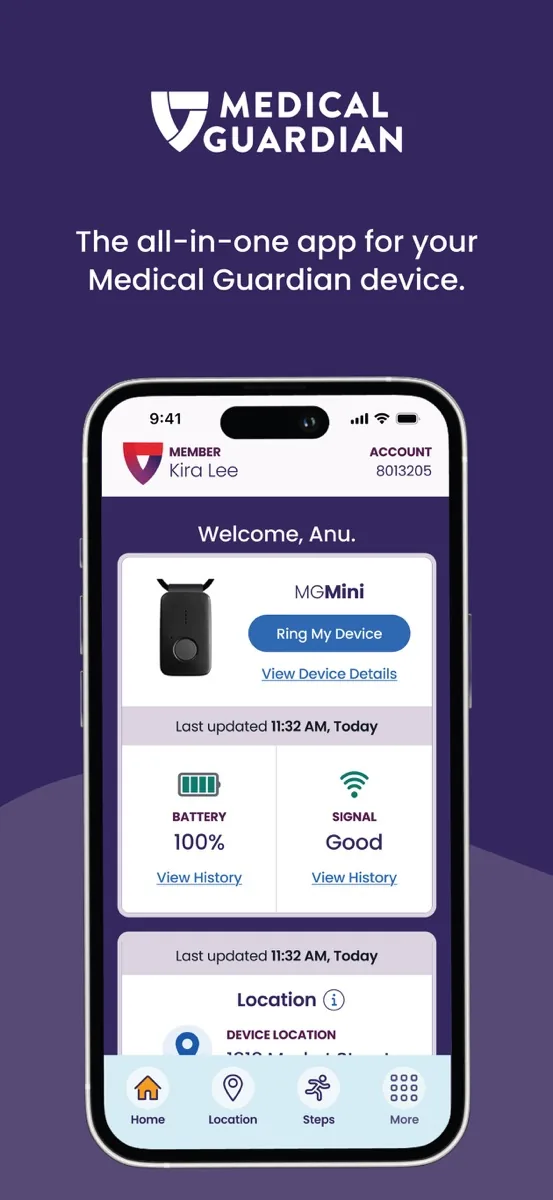
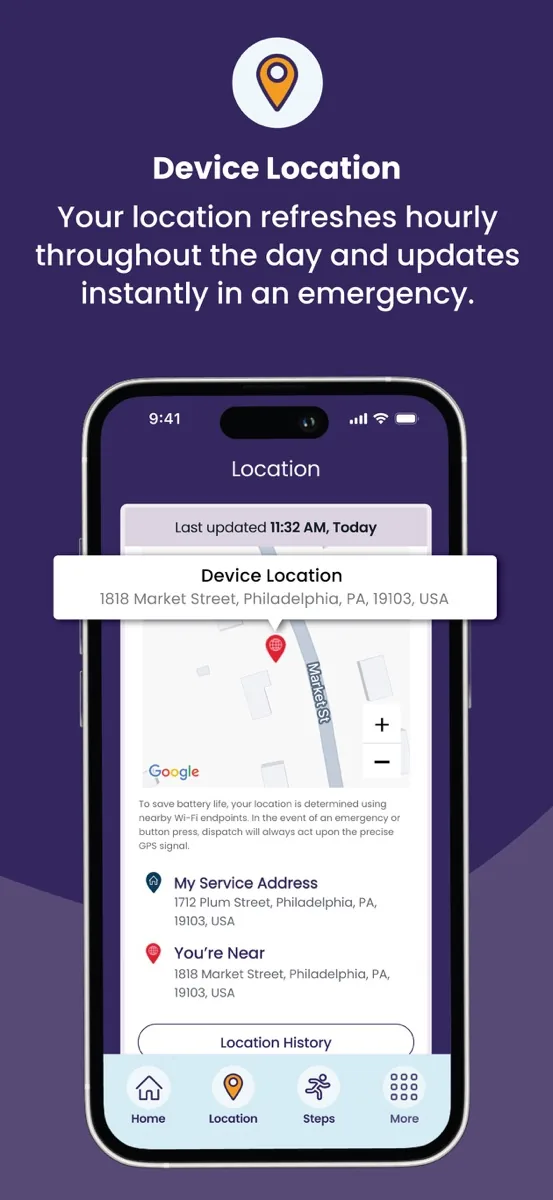
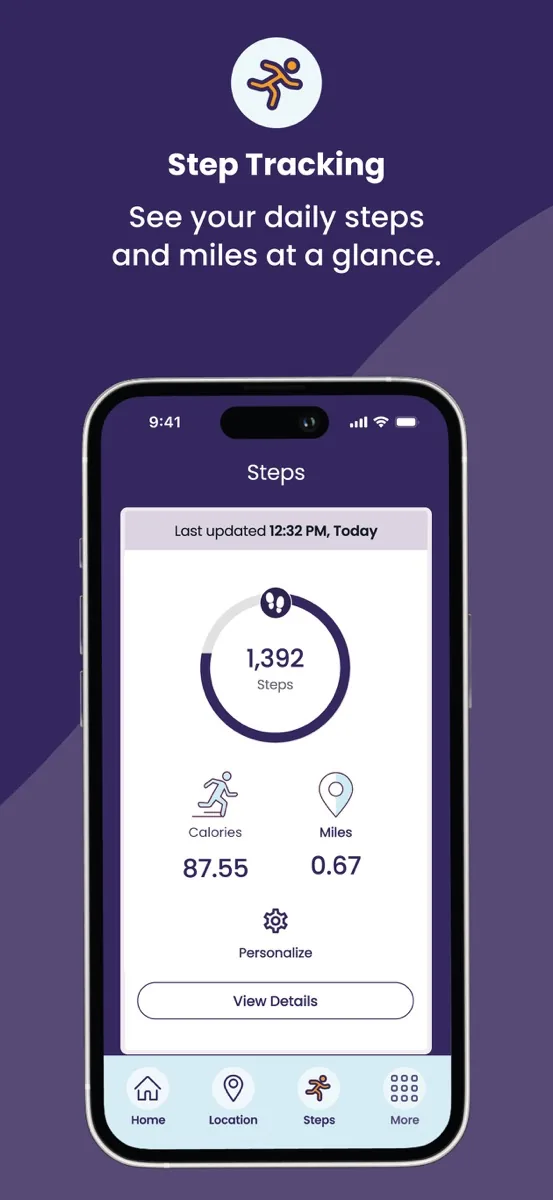
The MyGuardian portal and app let you build a care circle of contacts, check device status and, for the MGMove, view hourly location history and step data. An optional add-on sends text and email notifications to everyone in the call chain during an emergency.
Water resistance
The wearable buttons and mobile devices are described as water-resistant for use in the shower. That matters, because Medical Guardian notes that bathrooms are a common place for falls. The in-home base stations themselves are not water-resistant.
How much does Medical Guardian cost? Plans and pricing structure
We do not list prices because they change often and our page shows them from our own data. The structure, per Medical Guardian's pricing guidance and product pages:
- Monitoring is a subscription, payable monthly, quarterly or annually, with lower effective rates on longer terms.
- Devices carry an upfront equipment cost, which independent reviewers note on top of monitoring.
- Add-ons include fall detection, wall buttons, extra wearable buttons, caregiver notifications, a protection plan for lost or damaged equipment, and the MGMove's messaging and reminders package.
- Spouse coverage: the comparison page says a second pendant is monitored free on some systems, but a footnote says this does not apply to every device, so confirm before ordering.
- Contracts and cancellation: Medical Guardian says it does not require long-term contracts, does not charge activation or cancellation fees, and gives prorated refunds for unused months of service.
One inconsistency is worth knowing about. While the main pricing and comparison pages say there are no cancellation fees, footnotes on some of the company's other pages carry the line "cancellation fees may apply." Ask for the cancellation terms in writing before you pay, particularly on an annual plan.
Is Medical Guardian reliable? Safety, warranty and support
Reliability for a medical alert service has two parts: the device and the people answering the call. On the device side, Medical Guardian's warranty page describes a one-year limited warranty against defects for equipment bought directly from the company, which excludes wear and tear, accidents, misuse and devices opened by anyone other than an authorised representative, and covers service only in the continental US. Equipment bought from third-party retailers is not covered by those terms. The optional protection plan covers loss, theft and damage.
On the monitoring side, the company's certifications and advertised response times are encouraging, and independent testers have broadly confirmed fast answers, as covered below. No device can guarantee a response in every situation: cellular devices depend on coverage, mobile devices need charging, and fall detection can miss falls. Build those limits into your plan. That might mean wearing the button in the shower, keeping the mobile device charged overnight, and agreeing with family how often someone checks in.
What other reviewers found
- The National Council on Aging's review team named Medical Guardian its top medical alert pick after hands-on testing, citing quick response times, dependable fall detection and long battery life. It listed the higher total cost and the absence of a trial period as the main drawbacks.
- TechRadar found emergency calls were answered in under 30 seconds on average and praised call quality, but criticised pricing transparency and described the sales approach as overly assertive after a risk quiz led to a sales call.
- SafeHome.org measured an average of about 23 seconds to reach an agent on mobile devices, with one slow outlier. Its in-home test call went unanswered from the tester's side, and police arrived for a wellness check about half an hour later, which the reviewer read as the escalation process working.
- SafeHome.org also noted the one-time equipment fee, that fall detection costs extra, and that the MGMove's messaging features require a further add-on.
Where they agree: all three rate the monitoring quality and speed highly, and all three say Medical Guardian is not a budget option once equipment and add-ons are counted. Where they differ: NCOA's experience of the company is smooth and its score is near perfect, while TechRadar's experience of the sales process was noticeably less comfortable, and SafeHome.org's in-home test shows that if a call cannot be completed, the next step may be a knock on the door. For a buyer, the practical lesson is to decide in advance which devices and add-ons you actually need, ask for a full written quote, and make sure the wearer understands what happens if they press the button and cannot speak.
What could be better
- Total cost. Equipment, monitoring and add-ons combine into one of the higher bills in the category.
- Add-ons for important features. Fall detection is extra on every device.
- Sales pressure. Requesting a quote or taking the online quiz can lead to marketing calls and texts. Read the consent boxes on the forms carefully.
- Mixed messaging on fees. The no-cancellation-fee promise sits alongside footnotes saying fees may apply.
- Short battery on the smartwatch. The MGMove needs charging every day, which some wearers forget.
- US-only service. Warranty service is limited to the continental US.
Who should choose something else
- People on a tight budget who mainly need an in-home button may find simpler landline systems from other providers cheaper over a year.
- Confident smartphone and smartwatch users may already have fall detection and emergency calling on a device they own. The NIA notes some smartwatches include this, though those features usually call emergency services or contacts directly rather than a staffed monitoring centre.
- People who would rather not deal with phone sales may prefer a provider with fully transparent online checkout.
- Anyone unsure whether they need a system at all should start with a conversation with their doctor about fall risk. The NIA's guidance covers exercise, medication reviews, eyesight checks and home safety changes that reduce the chance of a fall in the first place.
Bottom line: is Medical Guardian worth it?
For an older adult who wants a choice between an in-home base and a mobile device, with a well-regarded monitoring centre, a caregiver app and no long contract, Medical Guardian is the provider we rank first. Independent testers back up its reputation for fast, professional answers. Go in with your eyes open on cost, buy only the add-ons that match a real need, get cancellation terms in writing, and involve the wearer and their healthcare team in the decision.
Frequently asked questions
Does Medical Guardian include fall detection?
Fall detection is available on Medical Guardian's devices as an optional add-on to the monitoring plan, not as a standard feature. The company says it may not detect every fall and can occasionally send a false alert, so a wearer who is able should still press the help button. On the in-home systems the fall detection pendant needs to be worn around the neck to work as intended.
Does Medical Guardian require a contract?
Medical Guardian says it does not require long-term contracts, and that it charges no activation or cancellation fees and refunds unused months on a prorated basis. Monitoring can be paid monthly, quarterly or annually. Because footnotes on some of its pages say cancellation fees may apply, ask the company to confirm the cancellation terms for your specific plan in writing before you pay.
Do I need a landline for Medical Guardian?
No. The MGHome Landline uses a phone line, but the MGHome Cellular works over a 4G LTE connection with no extra connectivity fee, according to the company. The Guardian Flex and the MGMove smartwatch have their own cellular connections and work away from home. Check the coverage indicator on mobile devices, because any cellular product depends on signal where you live and travel.
Is a medical alert system a substitute for medical care?
No. A medical alert system connects you to a monitoring centre that can call for help, and Medical Guardian itself says it does not replace 9-1-1. It does not diagnose or treat anything. The National Institute on Aging recommends telling your doctor about any fall and discussing prevention. Speak to a qualified health professional about your own risks and needs.
What warranty comes with Medical Guardian equipment?
Medical Guardian's warranty page describes a one-year limited warranty against defects in materials and workmanship for equipment bought directly from the company, with service limited to the continental US. It excludes normal wear and tear, accidents, misuse and devices opened by unauthorised people. An optional protection plan covers lost, stolen or damaged equipment for an extra monthly fee.
Sources
- Compare medical alert systems, Medical Guardian
- How medical alert systems work, Medical Guardian
- MGHome Cellular, Medical Guardian
- Guardian Flex, Medical Guardian
- MGMove smartwatch, Medical Guardian
- MGHome Landline, Medical Guardian
- Buying advice and pricing, Medical Guardian
- Warranties, Medical Guardian
- Falls and Fractures in Older Adults, National Institute on Aging
- Aging in Place: Growing Older at Home, National Institute on Aging
- Medical Guardian Review, National Council on Aging
- Medical Guardian review, TechRadar
- Medical Guardian Reviews, SafeHome.org