
Our verdict
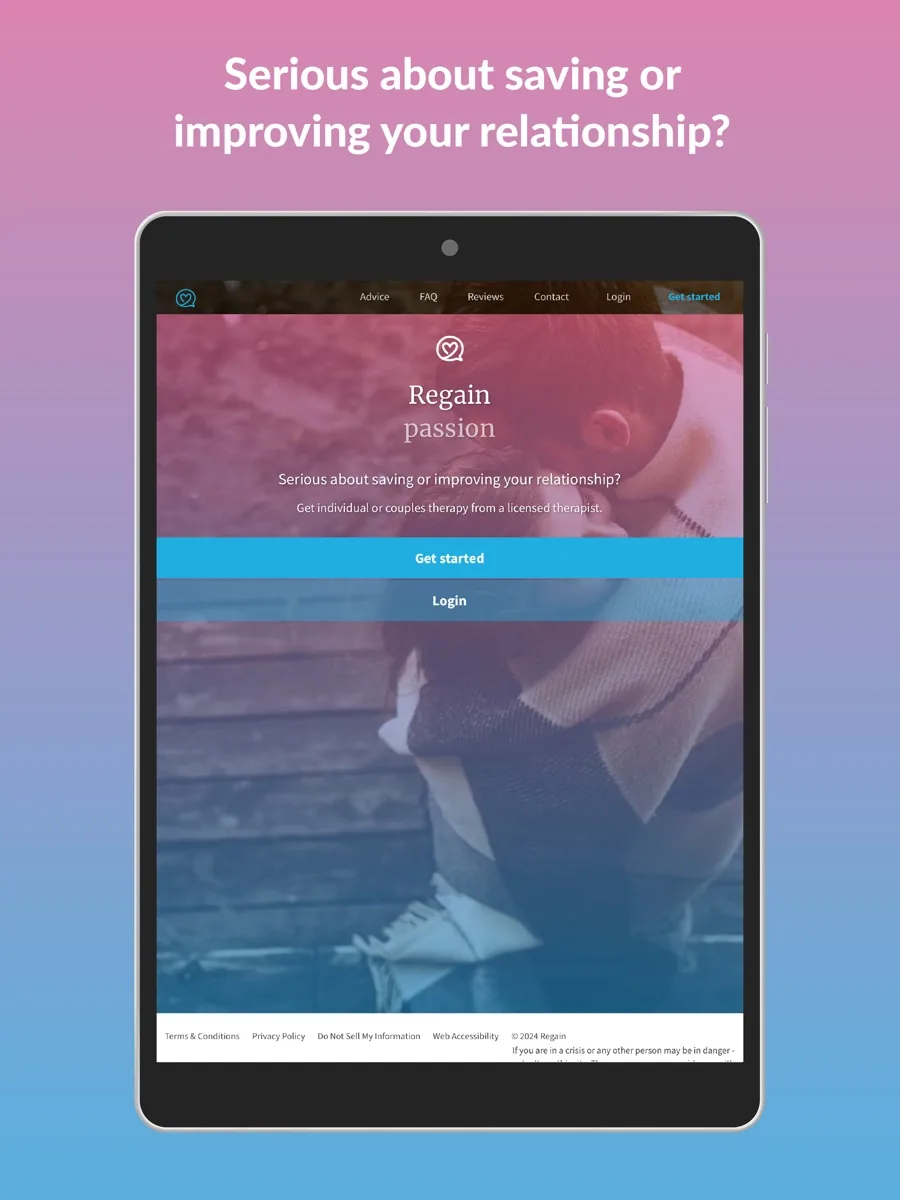
This Regain review covers an online therapy platform built specifically around relationships. Regain connects you, and if you choose, your partner, with a licensed therapist through a shared messaging room and scheduled live sessions by video or phone. It is part of the same family of services as BetterHelp, and it brings that model to couples who struggle to find a local counsellor or to line up two diaries for in-person appointments.
We rank Regain as the best option for couples in our online therapy category because it is designed around joint accounts from the start rather than adding couples as an afterthought, and because it makes starting relationship therapy much easier logistically. It also has clear limits. It does not take insurance, it cannot diagnose or prescribe, therapist matching is automatic at first and quality varies, and its parent company settled a Federal Trade Commission case over sharing health information with advertisers. Regain is also not suitable for anyone in crisis or in a relationship where there is abuse.
NerdBible did not use Regain for this review, and nothing here is medical or mental health advice. It is an editorial assessment based on Regain's FAQ and privacy statements, the FTC's refund notice, guidance from the National Institute of Mental Health, and independent reviews by Forbes Health, Healthline and Choosing Therapy. If you are unsure what kind of help you need, a licensed mental health professional or your doctor can advise you. If you or someone else is in danger, call or text 988 in the US, or your local emergency number.
What is Regain and who is it for?
The Regain FAQ describes an online relationship therapy platform where every session is run by a licensed therapist. You can start alone and invite your partner later, or sign up together. Partners can take part from different locations, which helps couples who work different shifts or live apart for part of the week. Regain says it can also be used for relationships that are not romantic, such as between family members, though therapist expertise in those situations varies.
According to the FAQ, Regain is not right for you if any of the following apply: you are a minor; you are in an urgent crisis or emergency; therapy has been ordered by a court or other authority; you are in a physically abusive relationship or worried for your safety; or you lack a reliable internet connection. For individual therapy that is not focused on a relationship, Regain itself points people to BetterHelp.
Key features
A shared couple room
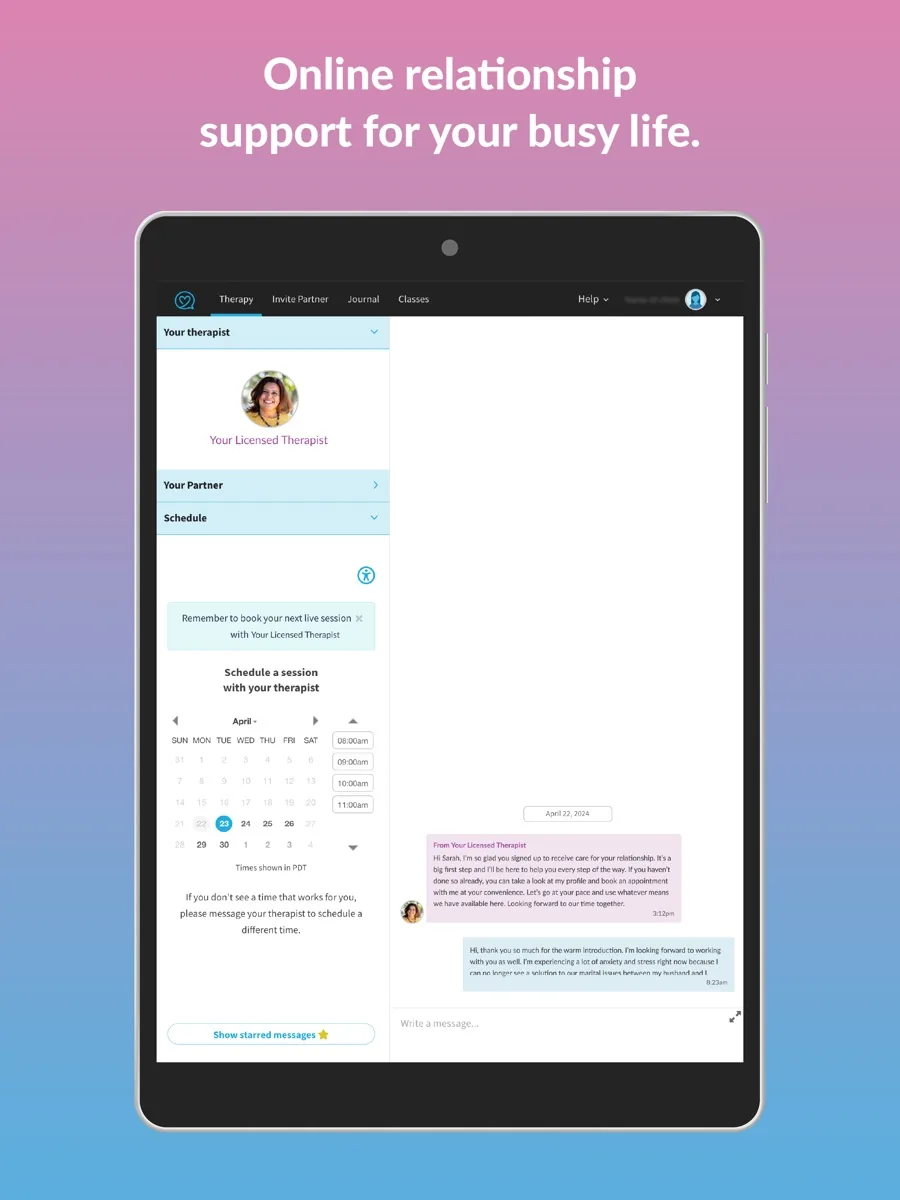
When both partners join, the FAQ says they share one account in which all written messages are visible to both partners and the therapist. Messaging is not live: you write whenever you like, and the therapist replies when they can, with an email notification when they do. That shared room is what makes Regain distinctive, but it also means there is no private written channel for one partner alone. Forbes Health lists that absence of private messaging as a drawback. If one partner wants to speak to the therapist individually, they book a separate live session.
Live sessions by video or phone
Regain's FAQ describes scheduled live sessions, typically 30 to 45 minutes, by video or phone. Partners can join a video session from separate devices and locations. You book a time slot through the platform and log in when it starts.
Licensed therapists
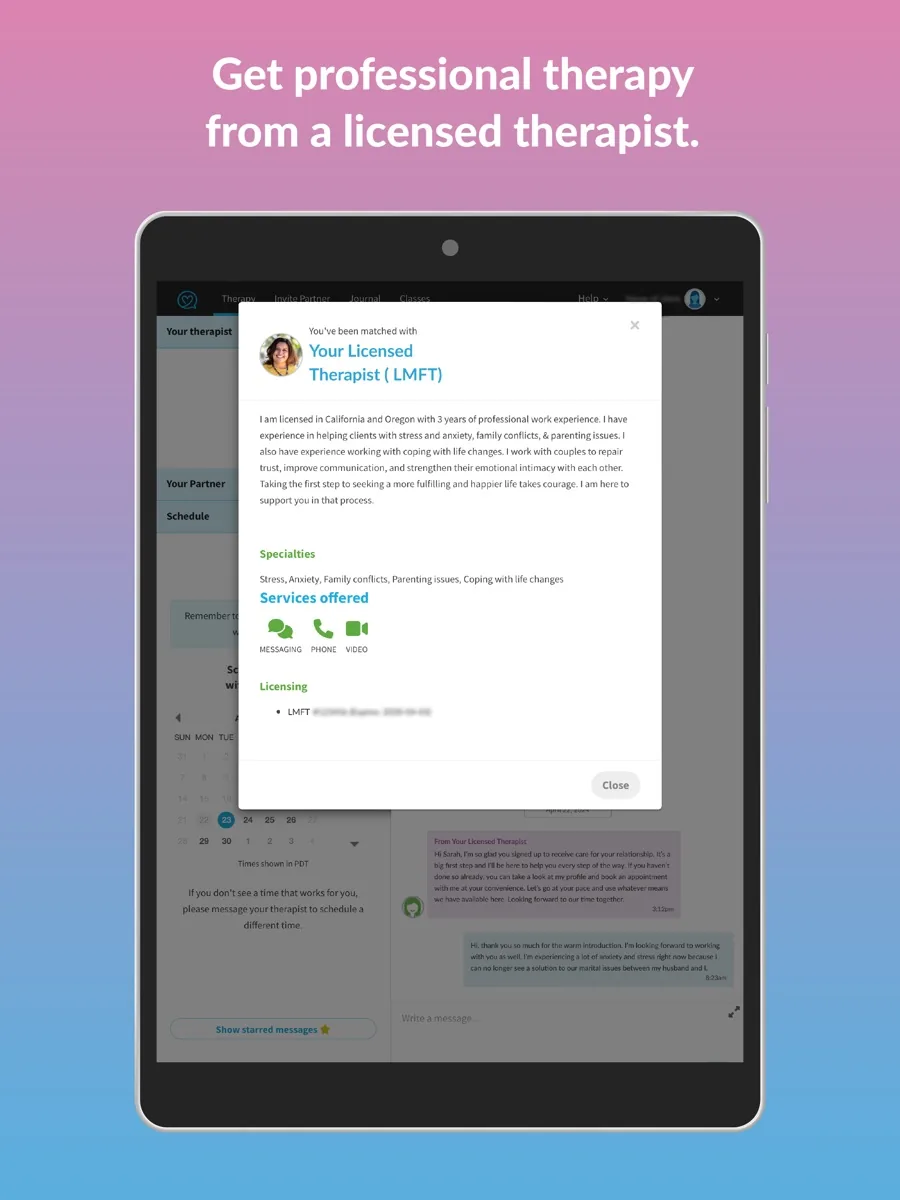
The FAQ says therapists must hold a recognised licence such as psychologist, licensed marriage and family therapist, clinical social worker or professional counsellor, with at least three years and 1,000 hours of hands-on experience. Not every therapist on the platform specialises in couples work, so it is worth stating your goals clearly at sign-up and asking about the therapist's relationship experience in your first exchange.
Matching and switching
After a questionnaire, Regain matches you with a therapist automatically, which the FAQ says usually happens within 48 hours for most clients but can take a few days. You can request a different therapist at any time. Choosing Therapy notes that you cannot pick your first therapist yourself.
Anonymity options
Regain lets you sign up with a nickname rather than your full name, though it asks for emergency contact details once therapy starts in case a therapist believes someone may be in danger.
How much does Regain cost?
Our product card shows current pricing. Structurally, Regain is a recurring membership billed by card or PayPal, with the price depending on your location, preferences and therapist availability, according to the FAQ. It covers messaging plus live sessions. Regain does not work with insurance companies. Healthline notes it can provide an itemised receipt if you want to ask your insurer about out-of-network reimbursement, and Choosing Therapy says financial aid is available to those who qualify. You can cancel at any time from your account's payment settings.
Is Regain safe and private?
Regain's FAQ says messages are encrypted, its servers sit in secure AWS data centres, its platform holds a HITRUST certification, and you can delete messages you have sent. Because it does not work with insurers, no claims information is shared with them. Therapists follow the confidentiality and mandated reporting rules of their licensing board, which means confidentiality has limits, for example where there is a serious risk of harm.
There is an important piece of history to weigh. The FTC's BetterHelp refunds page explains that BetterHelp, whose websites include Regain, agreed to pay 7.8 million dollars to settle charges that it promised to keep users' information private but shared data, including email addresses, IP addresses and answers to health questions, with Facebook, Snapchat, Pinterest and Criteo for advertising. Refunds went to people who paid for services during the period the FTC covered. Regain's current cookie notice still says that, if you agree, some personal information may be shared with advertising and analytics partners, and it offers a sharing settings page to opt out. If privacy is a priority, review those settings when you sign up.
What does the evidence say about online and couples therapy?
The National Institute of Mental Health describes psychotherapy as a range of treatments that help people identify and change troubling emotions, thoughts and behaviours, usually delivered by a licensed mental health professional. It notes that psychotherapy and medication are the most common forms of mental health treatment and that the right approach depends on the person. Regain's own FAQ is candid that online therapy is not a substitute for in-person care in every case, and its therapists cannot make diagnoses, prescribe medication or fulfil court orders. A doctor or licensed clinician can help you decide whether online relationship therapy is the right level of support.
What could be better
- No insurance. You pay out of pocket.
- No private written channel per partner. All messages in a joint account are visible to both.
- Automatic first match. You cannot choose your first therapist, and specialisms vary.
- Response times vary. Messaging is not live, and some users report slow replies.
- Privacy history. The FTC settlement is a reason to check sharing settings carefully.
- Limited scope. No diagnosis, no prescribing, not for crises or abusive relationships.
Who should choose something else?
If there is any physical abuse or fear in your relationship, couples therapy is not the recommended route; Healthline notes that the National Domestic Violence Hotline does not recommend couples counselling in abusive relationships, and The Hotline offers confidential support. If you are in crisis, contact the 988 Suicide and Crisis Lifeline by calling or texting 988. If you want to use insurance, an in-network local therapist or a platform that bills insurers may cost less. If you need a diagnosis or medication, you need a clinician who can provide that. And if you want individual therapy that is not about a relationship, Regain itself suggests its sister service.
What other reviewers found
- Forbes Health credited Regain's helpful articles, nickname sign-up and openness to non-romantic relationships, but listed the lack of private messaging for each partner, sparse detail about how the service works, matching that can take days and the inability to diagnose as drawbacks.
- Healthline found Regain a reasonable option for couples who cannot attend in-person counselling, stressed that it should not be used in a crisis or where there is domestic abuse, and noted it does not accept insurance.
- Choosing Therapy rated Regain 3.5 out of 5, praising its affordability against in-person couples counselling, flexible scheduling and easy app, while listing no insurance, location-dependent pricing and automatic matching as cons.
- The FTC's refund notice confirms Regain was among the BetterHelp websites covered by the health data settlement, an issue the review outlets mention less prominently than the regulator does.
Where reviewers agree and disagree
The outlets agree on Regain's main value: convenient, comparatively affordable access to licensed therapists for couples, with joint sessions from separate locations. They also agree on the main limits: no insurance, no diagnosis or prescribing, and unsuitability for crises or abuse. They differ on enthusiasm. Healthline is broadly positive, Choosing Therapy is lukewarm at 3.5 out of 5, and Forbes Health highlights the shared messaging room as a weakness rather than a strength. For a buyer, the consistent advice is to treat the first weeks as a trial, switch therapists quickly if the fit is wrong, and check privacy settings at sign-up.
Is Regain worth it?
For couples who want to start relationship therapy but cannot manage in-person appointments, it can be. Regain removes the scheduling barrier and puts both partners in one room with a licensed therapist. Whether it is worth it depends on the therapist you are matched with, so use the right to switch freely, and compare the cost with in-network local options if you have insurance.
Frequently asked questions
Can my partner and I use Regain from different places?
Yes. Regain's FAQ says partners share one account and can join live video or phone sessions from separate devices and locations. Messages in the shared room are visible to both partners and the therapist. If one partner wants to talk to the therapist privately, they can schedule an individual live session, but there is no private written channel inside a joint account.
Are Regain therapists licensed?
Regain says every therapist holds a recognised licence, such as psychologist, marriage and family therapist, clinical social worker or professional counsellor, and has at least three years and 1,000 hours of experience. Not all specialise in couples work, so describe your goals at sign-up and ask about relationship experience. You can switch therapists at any time if the fit is wrong.
Does Regain take insurance?
No. Regain's FAQ says it does not work with insurance companies, so no information is shared with insurers. Healthline notes Regain can provide an itemised receipt you can submit to your insurer for possible out-of-network reimbursement, though coverage depends on your plan. Choosing Therapy reports financial aid for people who qualify. Check with your insurer before relying on any refund.
Is Regain private?
Regain says messages are encrypted and its platform is HITRUST certified. However, the FTC says its parent BetterHelp, whose websites include Regain, paid 7.8 million dollars to settle charges that it shared health-related data with advertising platforms. Regain's cookie notice still allows some sharing with advertising partners unless you opt out, so review the sharing settings when you sign up.
When is Regain not the right choice?
Regain says it is not suitable for minors, people in crisis, court-ordered therapy, or anyone in a physically abusive relationship or worried for their safety. In a crisis, call or text 988 in the US. If there is abuse, The Hotline offers confidential support. A doctor or licensed clinician can help you decide what level of care fits your situation.
Sources
- Regain FAQ
- Regain, homepage
- BetterHelp Refunds, Federal Trade Commission
- Psychotherapies, National Institute of Mental Health
- 988 Suicide and Crisis Lifeline
- The National Domestic Violence Hotline
- Regain Online Couples Therapy Review, Forbes Health
- Regain Couples Counseling Review, Healthline
- Regain Therapy Review, Choosing Therapy