This Babbel review explains why the subscription language app tops our language learning ranking, and who would be better served by something else. Babbel takes a more structured, course-like approach than game-style apps: short lessons built around real conversations, with grammar explained along the way. That suits adults who want to speak and understand a new language for travel, work or family, but it is not a route to fluency on its own, and its subscription model is less flexible than some rivals.
Babbel review verdict: is it worth it?
For English speakers learning one of the major European languages, Babbel is the most rounded app we have assessed. Its lessons are short, practical and clearly sequenced, it explains grammar instead of leaving you to guess, and it adds speech recognition, review tools, podcasts and an AI conversation partner on top. Independent reviewers rate it highly, often as the more grown-up alternative to gamified apps.
Its limits are the course catalogue and the commitment. Babbel teaches a smaller set of languages than some competitors, the depth of content varies by language, and no app takes you to advanced level by itself. If you want a free way to dabble, or a language Babbel does not teach, look elsewhere.
What Babbel is and who it is for
Babbel is a language learning company that sells subscriptions to its app and website. Babbel says its courses are created by more than 200 language experts, and it reports more than 25 million subscriptions sold. Lessons cover reading, listening, speaking and writing, with dialogues based on everyday situations such as ordering food, making plans or talking about work.
For English speakers, Babbel's homepage lists courses in Spanish, French, German, Italian, Portuguese, Russian, Danish, Dutch, Indonesian, Norwegian, Polish, Swedish and Turkish, and there is also an English course for learners of English. Babbel suits:
- beginners and returning learners who want structure and grammar explanations
- travellers and people relocating who need practical conversation quickly
- adults who find points, streaks and leaderboards distracting
- learners who already speak a related language and want to build on it
Key features
Short, conversation-first lessons
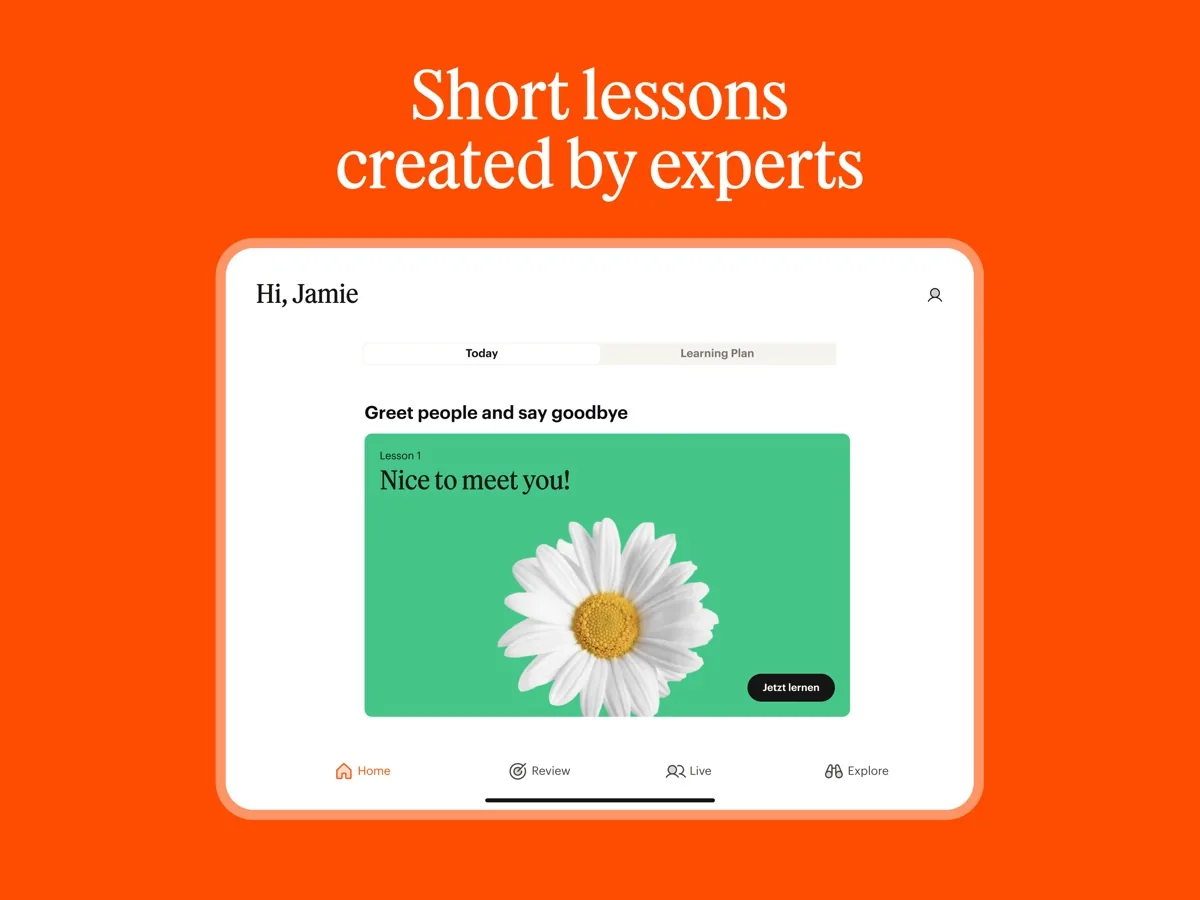
Babbel's method page says a typical lesson takes about six minutes and is built around real-life situations, teaching phrases you can use straight away. Grammar points are introduced in context rather than as long tables, and new vocabulary is recycled through later lessons.
Review and spaced repetition
Babbel says review is built into the learning path, with unit recaps, end-of-lesson correction of mistakes, and vocabulary drills using spaced repetition, which brings back difficult words more often. This is the feature that turns quick lessons into lasting memory, so it is worth using every day.
Speaking practice
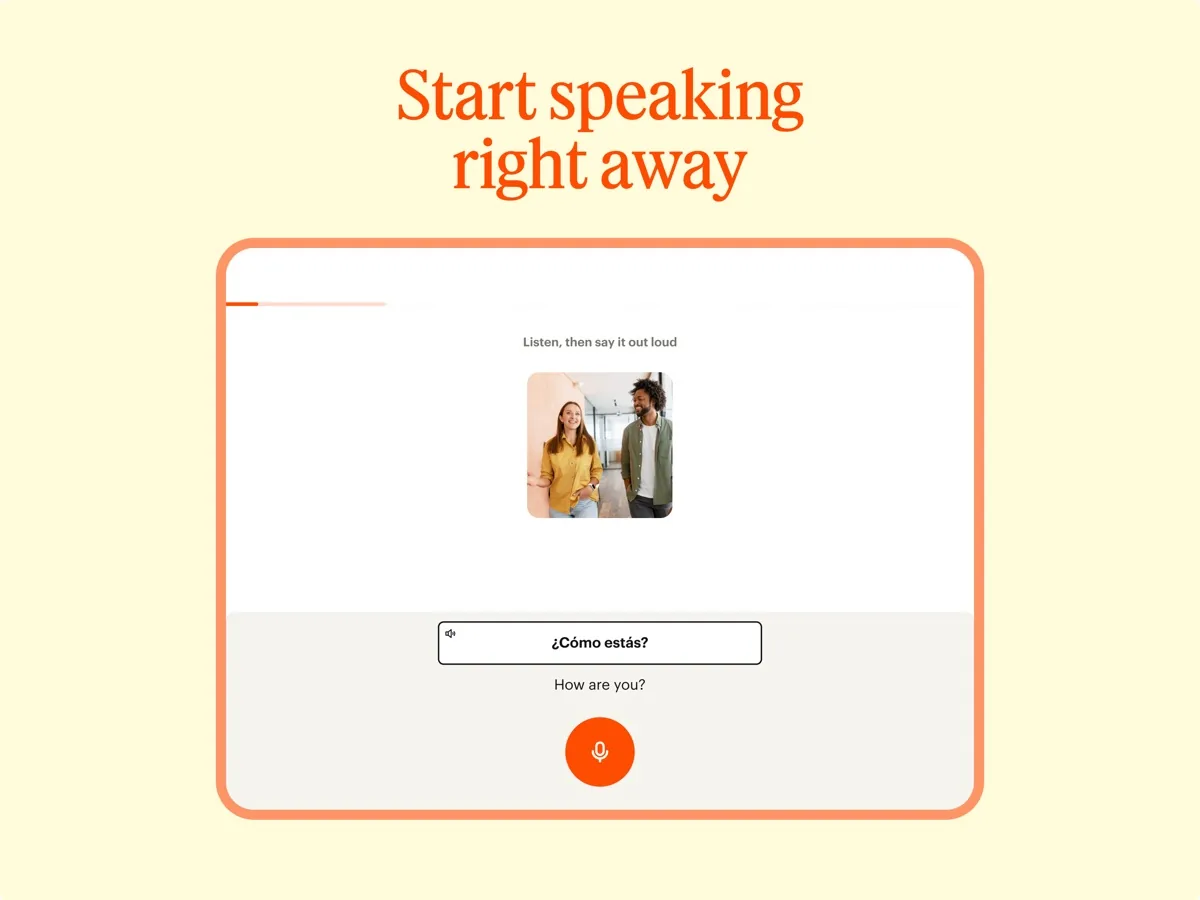
Babbel uses speech recognition to give feedback on pronunciation. Its App Store listing also describes Guided Conversations and Babbel Speak, an AI conversation partner for freer speaking practice. Tom's Guide, which spent two weeks with the AI feature, found the voice clear and realistic, with options to slow down, repeat or translate each line.
Listening, podcasts and offline use
Babbel's homepage mentions podcasts alongside lessons, and its App Store listing says lessons can be downloaded for offline learning, useful on flights or commutes without a reliable connection.
How much does Babbel cost? Plans and pricing structure
Our product card shows current prices. Structurally, Babbel is a paid subscription with a free first lesson to try before you buy.
- Subscriptions: Babbel's App Store listing offers 1, 3, 6 and 12-month plans, which renew automatically unless cancelled at least 24 hours before the end of the period.
- Lifetime access: Babbel also sells a one-off lifetime option, which outlets including PCMag list alongside the subscriptions.
- Where you buy matters. Plan lengths and cancellation and refund handling can differ between Babbel's website and the app stores, because app store purchases follow Apple's or Google's billing rules. Check the terms at checkout.
There is no permanent free tier. If you only want occasional vocabulary practice, a free app may be enough.
Is Babbel safe? Privacy and data
Babbel requires an account, and its App Store privacy label says it collects identifiers, purchase history, contact information and usage data linked to you for purposes including analytics, personalisation, app functionality and advertising, and that some data may be used to track you across other companies' apps and websites. That is common for subscription apps but worth knowing. On iPhone you can decline tracking through Apple's App Tracking Transparency prompt, and Babbel publishes its privacy policy on its corporate site.
On effectiveness claims: Babbel cites studies with researchers at Yale University, the City University of New York and Michigan State University, and its App Store listing reports that all participants in its Yale study improved their oral proficiency within three months. These studies were run in collaboration with Babbel, so treat them as the vendor's evidence rather than independent proof.
What other reviewers found
- Wirecutter picks Babbel as its best app for learning theory alongside vocabulary, comparing it to a more mature version of game-style instruction thanks to grammar guides and human-recorded audio, but faults the lack of a monthly plan on its site and the small number of languages.
- PCMag rates Babbel's lessons as effective and high quality, and says it particularly suits people who already speak a related language, while noting that exercises can feel dull, content varies by language, and live classes are no longer offered.
- TechRadar calls Babbel the most thorough language app it covers, praising its ease of use and range of tools, but says shorter subscriptions are pricey and some languages have less content.
- Tom's Guide found Babbel's AI conversation feature a low-pressure way to practise speaking, but observed that it accepted answers whose pronunciation was only roughly right without correcting them.
Where they agree: every outlet rates the quality and structure of Babbel's lessons highly, and every outlet notes that the depth of content is uneven across its languages. Wirecutter and TechRadar both see the subscription terms as a drawback.
Where they disagree: the outlets count languages differently, partly because some include the English course and some do not, and they differ on plan lengths. Wirecutter reports a three-month minimum on Babbel's website, while Babbel's own App Store listing offers a one-month plan. Opinions on engagement also vary: Wirecutter finds lessons engaging, PCMag finds some exercises dull. For a buyer, the practical step is to take the free lesson in your target language, then compare plan lengths in the app store and on the website before you pay.
How to get the most out of Babbel
Because Babbel's lessons are short, the biggest factor in results is consistency rather than session length. A few practical habits make a noticeable difference:
- Use the review tools daily. New lessons feel like progress, but the spaced repetition drills are what move vocabulary into long-term memory.
- Speak out loud. Use the speech exercises and the AI conversation partner even when it feels awkward, and remember that Tom's Guide found the feedback forgiving, so listen closely to the native audio and copy it.
- Add real input. Pair lessons with podcasts, music, simple reading or videos in your target language so you hear it used naturally.
- Find a human. Since live classes are no longer offered, a language exchange partner or tutor fills the gap for real conversation.
- Choose the plan length honestly. A lifetime purchase only pays off if you will keep using it, so many learners are better served by testing a shorter plan first.
What could be better
- Limited language list. Fourteen courses in total, mostly European, so learners of Japanese, Korean, Mandarin or Arabic need another app.
- Uneven depth. Popular languages such as Spanish, French and German have more content than smaller courses.
- No live classes. PCMag reports that Babbel Live has been discontinued.
- Speech feedback is forgiving. Tom's Guide found the AI partner let imperfect pronunciation pass.
- Ceiling on progress. Wirecutter notes that no app it assessed goes beyond the upper-intermediate level, so serious learners will need classes, tutors or immersion too.
Who should choose something else
If you want to learn a language outside Babbel's catalogue, choose an app that teaches it. If you want a free, game-like habit with very short sessions, a free app may keep you more motivated. If your priority is speaking with a human, a tutoring marketplace or local class will give you live conversation that Babbel no longer offers. And if you are working towards an exam or advanced fluency, treat any app as a supplement to formal study.
Bottom line
Babbel ranks first because it teaches the way many adults want to learn: short, purposeful lessons that explain why the language works the way it does, with enough speaking and review to make it stick. It is not the biggest catalogue or the cheapest option, and you will need more than an app to become fluent. For a solid, structured start in a major European language, it is the app we would choose.
Frequently asked questions
How many languages does Babbel offer?
For English speakers, Babbel's homepage lists thirteen languages: Spanish, French, German, Italian, Portuguese, Russian, Danish, Dutch, Indonesian, Norwegian, Polish, Swedish and Turkish. It also offers an English course for learners of English, which is why some reviewers count fourteen. The amount of content varies, with the most popular languages offering the deepest courses.
Is there a free version of Babbel?
Babbel does not have a permanent free tier. You can take a free first lesson in your chosen language to see how the course works before subscribing. After that, access requires a subscription or the lifetime option. If you want ongoing free practice, a free app can work alongside or instead of Babbel, depending on your goals.
How long are Babbel lessons?
Babbel's method page says a typical lesson takes about six minutes, and its App Store listing suggests learning in as little as ten minutes a day. Short lessons make daily practice easier to fit in, and Babbel's review tools then revisit vocabulary at intervals so that what you learn is retained rather than forgotten after a few days.
Can Babbel make you fluent?
No app on its own is likely to make you fluent. Wirecutter found that none of the apps it assessed teaches beyond upper-intermediate level. Babbel can give you a strong foundation in everyday conversation and grammar, but reaching fluency usually also takes conversation with native speakers, reading, listening and, for many learners, classes or a tutor.
Can you cancel a Babbel subscription?
Yes. Babbel subscriptions renew automatically, and its App Store listing says renewal happens unless you cancel at least 24 hours before the current period ends. Subscriptions bought through Apple or Google are managed in those stores, while website purchases are managed in your Babbel account settings. Refund handling can differ by where you bought, so check the terms that apply.
Sources
- Babbel homepage, Babbel
- The Babbel Method, Babbel
- Babbel: Language Learning, Apple App Store
- Learning with Babbel develops conversational skills, Babbel press release
- The Best Language Learning Apps, Wirecutter
- Babbel Review, PCMag
- Best language learning apps, TechRadar
- I spent 2 weeks speaking to a Spanish AI in Babbel, Tom's Guide