
Our verdict
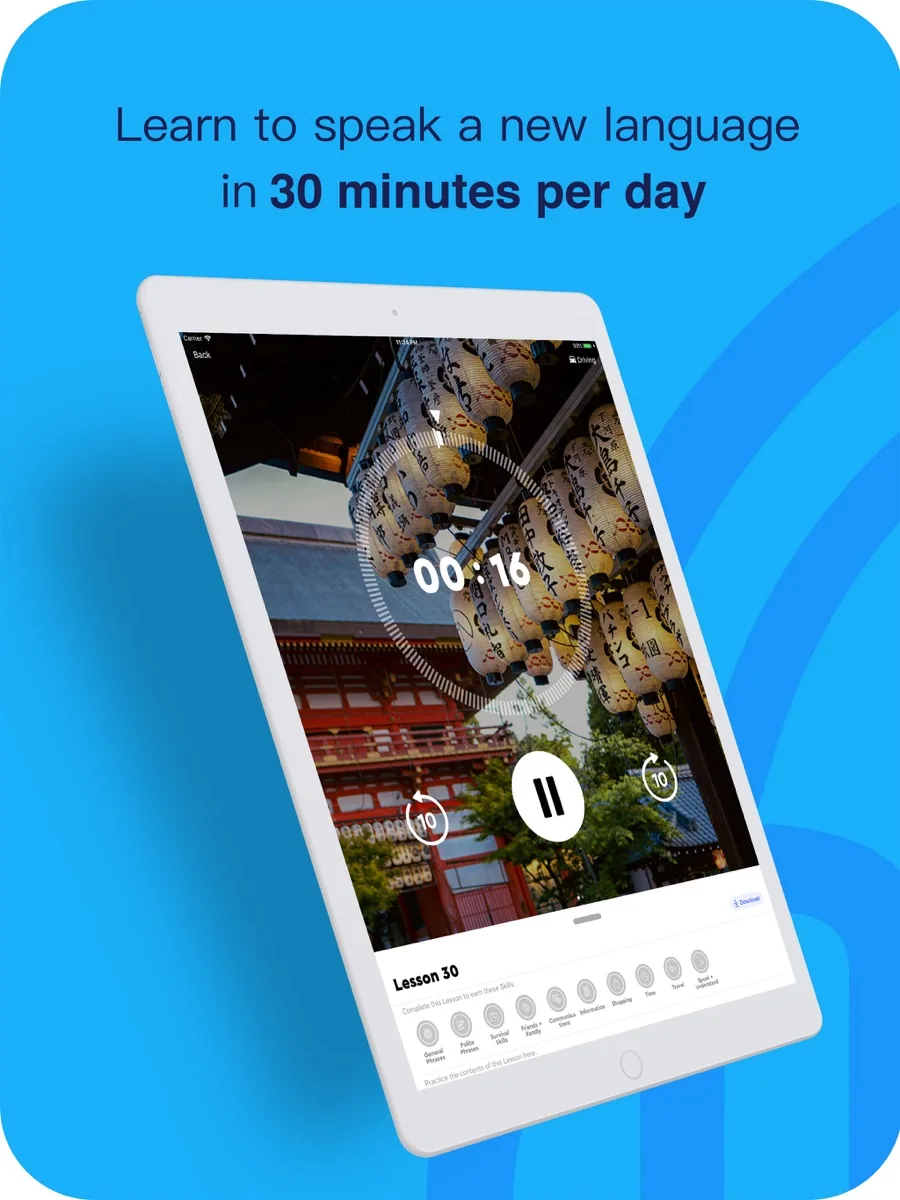
This Pimsleur review is about the oldest name in language apps and the one that asks the most of your ears. Pimsleur teaches through 30-minute audio lessons in which a narrator and native speakers prompt you to say phrases out loud, recall them a little later, and build them into conversations. The app now wraps those lessons with flashcards, reading practice, a pronunciation coach and quick games, but the spoken core is what sets it apart from tap-and-swipe rivals.
We rank Pimsleur as the best audio method in our language learning category because nothing else delivers structured, hands-free speaking practice as well. It is not the cheapest app, it teaches less reading and writing than its competitors, and it does not explain grammar the way a textbook would. If your goal is to hold a basic conversation and you have a commute, a walk or a set of chores to fill, it is the strongest fit we know of. If you want a broad, visual course that includes writing, pair it with something else or choose a different app.
NerdBible did not complete a Pimsleur course for this review. It is an editorial assessment based on Pimsleur's own pages and FAQ, its App Store listing, the published history of the method, and independent reviews from Wirecutter, CNET and TechRadar.
What is Pimsleur and who is it for?
Pimsleur is owned by Simon and Schuster's audio division, according to the Pimsleur FAQ. The method is named after Dr Paul Pimsleur, a linguist who taught at UCLA and Ohio State and whose research on memory and language learning underpins the courses, as the Pimsleur Method page explains. The history of the programme runs from tapes to CDs to software and, more recently, a mobile app with smart speaker support.
Pimsleur is a good match for:
- Commuters and drivers who have daily time with their hands busy and their ears free.
- Learners whose priority is speaking, such as travellers, people with family abroad or anyone preparing for a move.
- People who learn by listening and find flashcard-only apps forgettable.
- Households learning together, since the multi-language plan supports additional users.
It is a weaker match for learners who need to read and write well quickly, those preparing for a written exam, and anyone who wants detailed grammar explanations.
How does the Pimsleur method work?
The Pimsleur Method page sets out four principles. Graduated interval recall brings a new word back at increasing intervals so it moves into long-term memory. The principle of anticipation asks you to produce an answer before you hear it, which keeps you actively engaged. Core vocabulary focuses on a limited set of high-value words and structures rather than long lists. Organic learning presents everything inside conversations so you absorb pronunciation, rhythm and intonation along the way.
In practice, each lesson opens with a short conversation, then breaks it down so you rebuild the phrases piece by piece. Wirecutter describes the narrator stripping a phrase into parts and explaining small details, such as how an article works in French, as the lesson goes. The FAQ says each 30-lesson level teaches between 300 and 500 new vocabulary items and that the most popular languages run to 150 lessons in total.
On effectiveness, Pimsleur's own pages describe the method as scientifically proven. A published efficacy study summarised on the programme's Wikipedia page reported that most participants who finished 30 lessons improved their oral proficiency rating by at least one level. That is encouraging, but it is a single study of a single course, and we found no independent long-term research comparing retention across apps. Treat claims about long-term results as plausible rather than settled.
Key features
Core audio lessons
The Pimsleur homepage describes 30-minute lessons designed to be done daily. The FAQ says the mobile app can download lessons for offline use, and progress syncs across devices. CNET notes the app has a driving mode, and the homepage mentions Apple CarPlay and Android Auto support for hands-free learning.
Practice tools
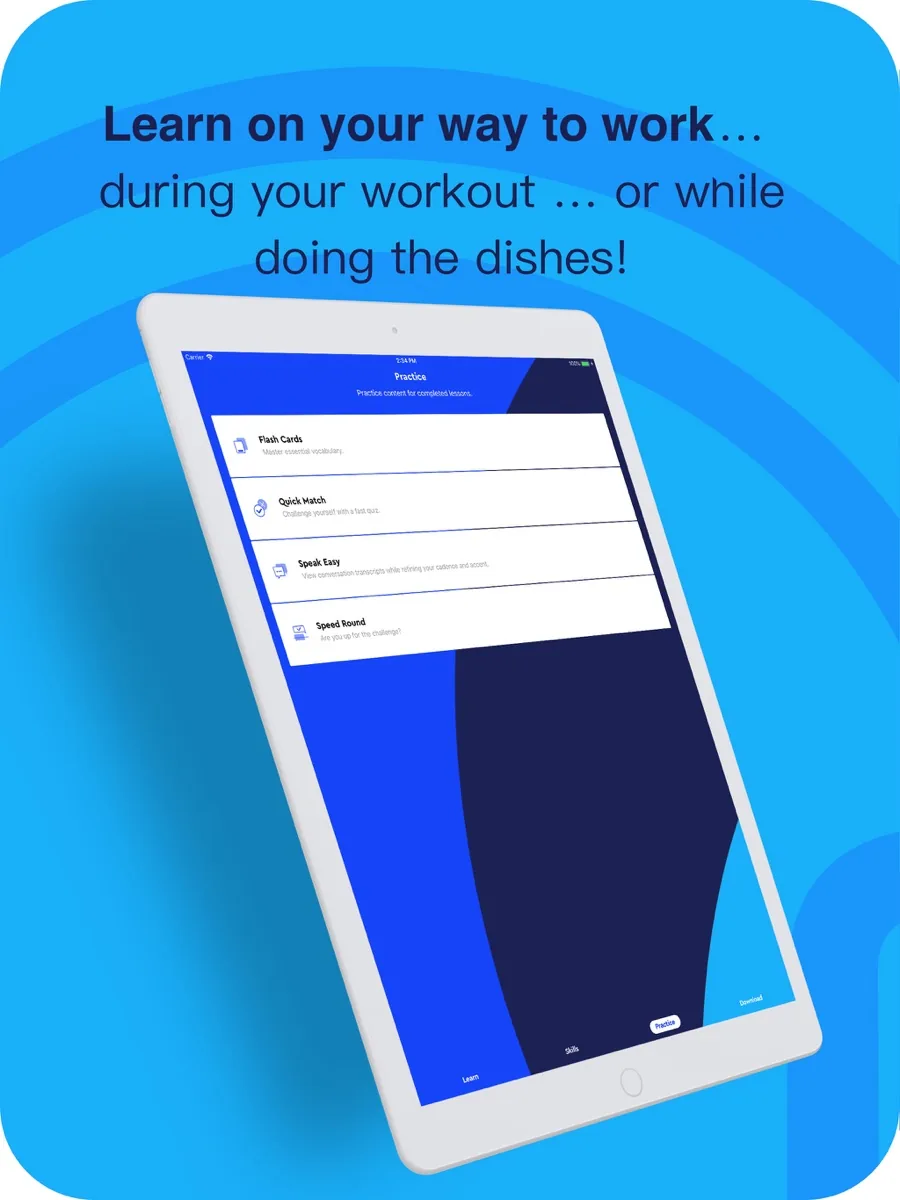
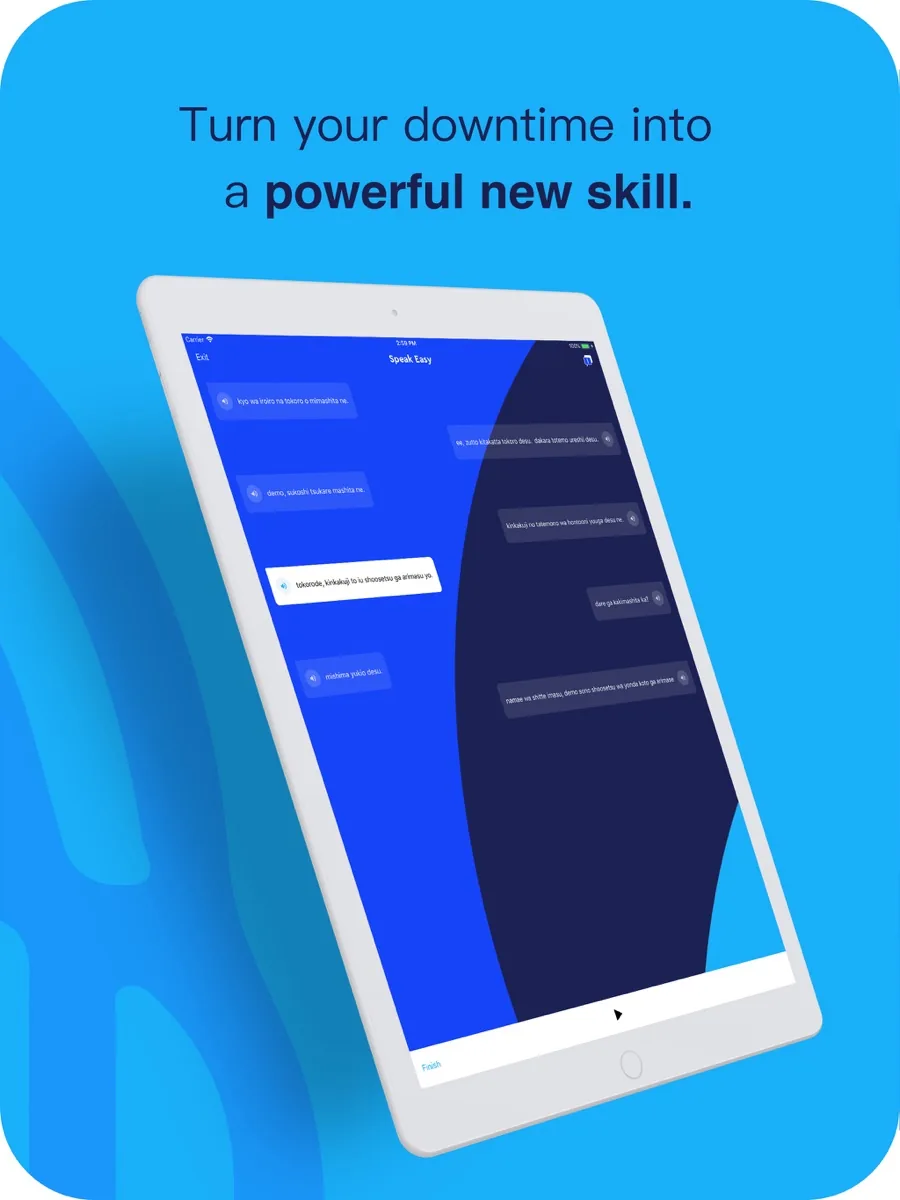
Premium and All Access plans add digital flashcards, Speak Easy interactive transcripts of conversations, quick match and speed round games, and Voice Coach, which grades your pronunciation of words and phrases. Wirecutter liked that Voice Coach shows what it thinks you said and scores it on a three-point scale, but pointed out that the core audio lessons themselves do not check your speech.
Reading lessons
Separate reading lessons teach the sound system and how letters combine, according to the FAQ. Pimsleur deliberately avoids transcripts during the core lessons, arguing that listening and recall are the fastest route to speaking.
Language range
The homepage and FAQ list 51 languages, plus English courses for speakers of other languages. Language depth varies: popular languages have five levels, while less common ones have fewer lessons. Wirecutter counted fewer languages in its own review, likely because it counted only courses with the full app experience, so check that your target language has the depth you need before subscribing.
How much does Pimsleur cost?
Our product card shows current prices. Structurally, the FAQ describes three subscription options: Audio Only for one language, Premium for one language with the interactive tools, and All Access for every language with the full feature set. All plans start with a seven-day free trial, and you need to cancel before the trial ends to avoid the first charge. Pimsleur also sells lifetime purchases that do not expire, and CNET notes you can buy individual levels or full courses outright.
Every independent source we read describes Pimsleur as more expensive than mainstream rivals. TechRadar lists its plans among its reasons to avoid the app, and Wirecutter suggests checking your public library for older Pimsleur recordings as a cheaper way to try the core method.
Is Pimsleur safe and private?
Pimsleur is a mainstream publisher's app with a large user base. Its App Store listing shows a rating of about 4.7 from tens of thousands of ratings and lists Simon and Schuster as the developer. The privacy label indicates that some data linked to your identity, including contact details and usage data, may be used for analytics, advertising and personalisation. That is normal for a consumer subscription app but worth knowing if you are privacy conscious. Subscriptions bought through the App Store or Google Play must be cancelled through that store, not the Pimsleur website.
What could be better
- Lessons are long. Thirty minutes is a commitment next to the five-minute sessions of most apps, as Wirecutter notes.
- Light on reading and writing. The spoken focus means less exposure to written language.
- Little explicit grammar. Patterns are absorbed through repetition rather than explained in depth.
- No speech checking during core lessons. It is easy to drift through a lesson without truly speaking.
- Cost. It is consistently one of the pricier options.
- Uneven depth. Less common languages have shorter courses.
Who should choose something else?
If you want a free way to build vocabulary, a gamified app with a free tier will cost nothing. If you want structured grammar explanations, an app that teaches theory alongside vocabulary will suit you better. Visual learners who prefer images and short interactive exercises may find Pimsleur's audio format tiring. And if you need certified proficiency for work or study, an accredited course or tutor will cover reading, writing and assessment that an audio programme cannot.
What other reviewers found
- Wirecutter picked Pimsleur as its best option for classroom-style lessons, praising the depth of its 30-minute audio instruction and its hands-free design, while noting long lessons, limited written practice and a high price.
- Wirecutter also observed that the core lessons do not use transcription to check your pronunciation, which only happens in the separate Voice Coach practice.
- CNET named Pimsleur its pick for learning on the go, likening the format to a podcast and highlighting downloadable lessons, smart speaker support and a driving mode, with the short free trial as its main caveat.
- TechRadar called Pimsleur its best app for audio, crediting its 51 languages and ease of use but listing expensive plans and the need to commit to daily listening as drawbacks.
Where reviewers agree and disagree
The outlets agree on what Pimsleur is for: spoken, hands-free learning that fits into a commute, with more instructional depth than gamified apps. They also agree it costs more than most competitors. Where they differ is in framing. Wirecutter sees the long, structured lessons as the main strength for serious learners, while TechRadar treats the daily listening requirement as a potential obstacle. Wirecutter is also the most explicit about weaker reading practice. For a buyer, the message is consistent: choose Pimsleur if speaking is the goal and you will genuinely listen daily, and budget for a second tool if you need writing.
Is Pimsleur worth it?
For learners who want to speak and have regular listening time, yes. Pimsleur's method is coherent, its lessons are well produced, and the app now adds enough practice tools to round out the audio. The free trial is long enough to tell whether the format suits you. If after a week you find yourself skipping lessons, a cheaper, shorter-format app is likely the better investment.
Frequently asked questions
How many languages does Pimsleur offer?
Pimsleur's FAQ and homepage list 51 languages for English speakers, along with English courses for speakers of other languages. Depth varies by language: the most popular ones have around 150 lessons across five levels, while less common languages have shorter courses. Some reviewers count fewer languages because not every course has the full set of app features, so check your target language first.
Is Pimsleur only audio?
The core lessons are audio, but the app adds reading lessons, flashcards, interactive conversation transcripts, quick games and a Voice Coach that grades pronunciation. Those extras come with Premium and All Access plans, while the Audio Only plan includes just the core lessons. Even with the extras, Pimsleur teaches less reading and writing than most rivals, according to Wirecutter.
Does Pimsleur have a free trial?
Yes. Pimsleur's FAQ says every plan starts with a seven-day free trial with full access to the features of that plan. You need to cancel before the trial ends to avoid the first charge, and if you subscribed through the App Store or Google Play you must cancel through that store rather than on the Pimsleur website.
Can Pimsleur make me fluent?
No single app makes you fluent, and Pimsleur does not need to claim otherwise to be useful. Its method is built to get you speaking basic, accurate conversation quickly. A published study reported gains in oral proficiency after 30 lessons, but fluency also requires reading, writing, wide vocabulary and real conversation practice with people, which an audio course alone cannot supply.
Can I use Pimsleur offline or in the car?
Yes. Pimsleur's FAQ says the mobile app lets you download lessons for offline use, and progress syncs when you reconnect. The homepage mentions Apple CarPlay and Android Auto support, and CNET highlights a driving mode designed to work without looking at the screen. The web version needs an internet connection, so download lessons before a trip.